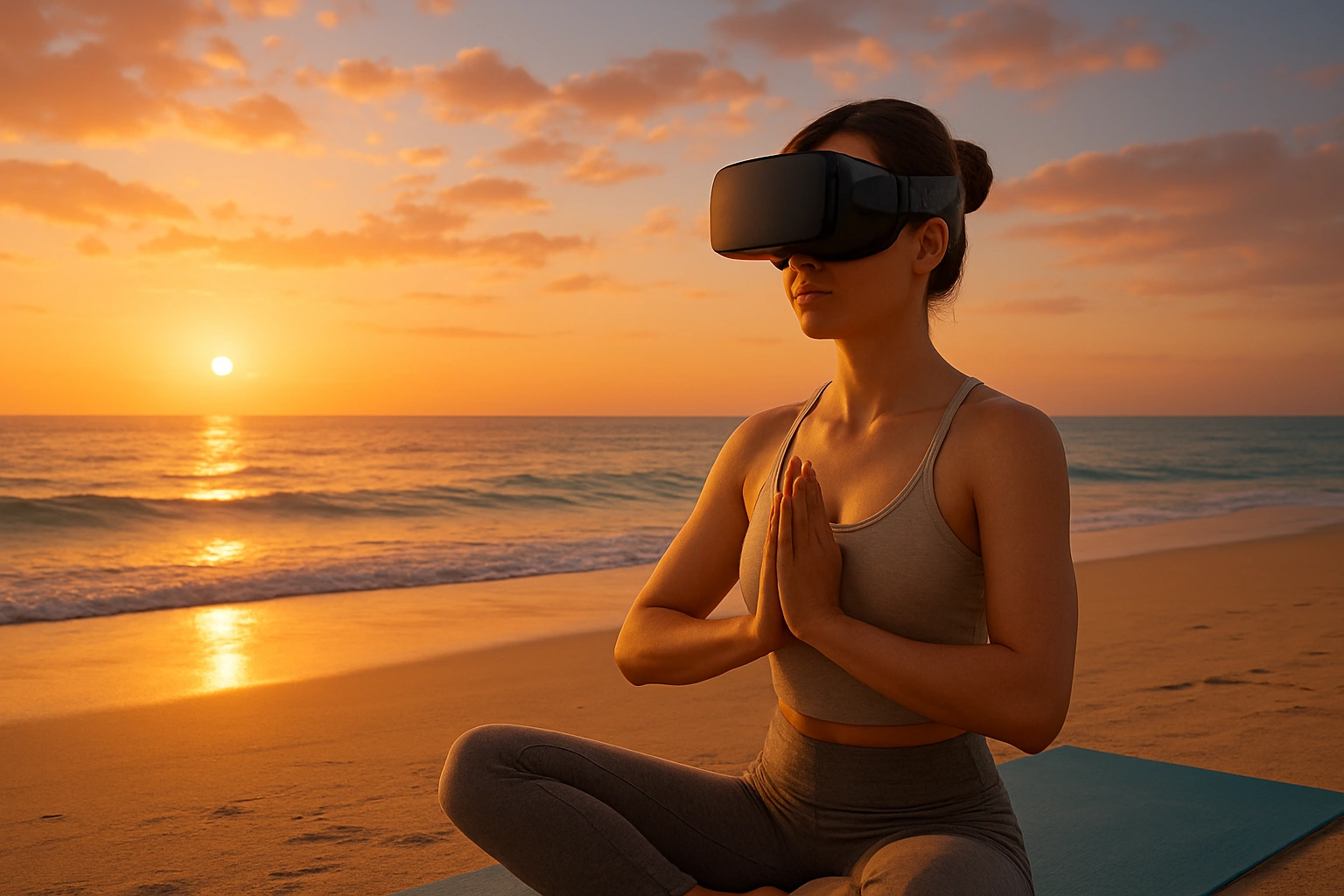
This is the promise of virtual reality yoga. This guide is for anyone seeking a sanctuary for their practice. We’re exploring the best VR yoga apps of 2025, which provide immersive studios and expert guidance to help you relax, stretch, and find your flow.
After reading this, you’ll know which apps offer the best instruction, the most calming environments, and the most effective path to building a consistent and deeply rewarding yoga practice.
What is VR Yoga?
VR yoga is the practice of following guided yoga classes within a 360-degree virtual environment. Using a VR headset, you are transported to a peaceful location where you can follow an instructor’s avatar or visual cues to move through different poses and flows. It’s your own private, distraction-free yoga studio.
In 2025, VR yoga has become a key component of the **virtual reality wellness** movement. As people increasingly seek convenient, at-home health solutions, technology is filling the gap. Publications like Forbes have noted the rise of immersive wellness, where tech like VR provides personalized and engaging experiences that were once only available in specialized studios.

Why VR is a Powerful Tool for Your Yoga Practice
A busy home can be the enemy of a peaceful yoga session. VR creates the perfect environment to focus on your mind-body connection.
A Private, Judgment-Free Studio
For beginners, practicing in a crowded class can be intimidating. VR offers a completely private space where you can learn the poses, wobble, fall, and get back up without any self-consciousness. It’s the perfect environment to build confidence.
Eliminates All Distractions
The laundry pile, the kids playing in the next room, the glare on the TV—all these distractions disappear when you put on a headset. By immersing you in a calming location, VR makes it easier to stay present on your mat and focused on your breath.
On-Demand Expert Instruction
Private yoga classes are expensive. VR yoga apps give you access to expert instruction anytime you want, for a fraction of the cost. You can choose a class that fits your mood, energy level, and schedule. For more on leveraging on-demand help, see how a virtual assistant can boost productivity.
Core Features of VR Yoga Apps
These apps offer more than just a pretty background. They are packed with features to enhance your practice:
- Guided Classes: A library of yoga sessions for different skill levels, from gentle beginner flows to more advanced Vinyasa classes.
- Immersive Environments: Choose your own virtual studio, whether it’s a tranquil beach, a peaceful mountain top, or a mystical cosmic space.
- 3D Instructor Avatars: Follow a clear, 3D instructor who demonstrates each pose from multiple angles, helping you perfect your form.
- Passthrough Mode: Many apps use the headset’s cameras to blend the virtual instructor into your real room, so you can see your surroundings and stay safe.
In-Depth Reviews: The 5 Best VR Yoga Apps of 2025
1. Alo Moves VR
From the popular yoga brand Alo, this app brings their world-class instructors and signature style into VR. It offers a premium, polished experience with a wide variety of yoga, stretching, and meditation classes.
| Pros | Cons |
|---|---|
| High-quality instruction from famous teachers. | Requires a subscription. |
| Stunning, photorealistic environments. | Fewer classes than their 2D app. |
| Excellent for all skill levels, from beginner to advanced. |
Best for: A premium, studio-quality yoga experience with top-tier instructors.
2. Exhale XR
Exhale XR is a dedicated wellness app that focuses on the connection between movement and breath. It features a library of yoga flows, stretching routines, and breathwork exercises led by a calming instructor in beautiful, stylized environments.
| Pros | Cons |
|---|---|
| Great focus on breathwork and mindfulness. | Smaller library of classes than larger platforms. |
| Beautiful, relaxing art style. | Subscription-based model. |
| Combines yoga with other wellness practices. |
Best for: A holistic wellness practice that combines yoga, stretching, and breathwork.
3. Maloka
While primarily a meditation app, Maloka also offers gentle, yoga-like mindful movement sessions. Each session helps you cultivate your own virtual island, making your practice feel rewarding and progressive.
| Pros | Cons |
|---|---|
| Gamified approach is great for building a habit. | Movement sessions are very gentle, not a workout. |
| A lot of content is available for free. | Not a dedicated yoga app. |
| Your personal island provides a sense of progress. |
Best for: Beginners who want a gentle, gamified introduction to mindful movement.
4. Guided Tai Chi
For those who enjoy the flowing nature of Vinyasa yoga, Guided Tai Chi offers a wonderful alternative. It’s a form of moving meditation that improves balance, flexibility, and focus. You follow a guide through 20-minute sessions in serene natural settings.
| Pros | Cons |
|---|---|
| Excellent for balance and mindful movement. | Not technically yoga, but very similar in spirit. |
| Calming and low-impact on the joints. | Requires enough space to move your arms freely. |
| One-time purchase model. |
Best for: A relaxing, flowing practice that focuses on balance and mindfulness.
5. TRIPP
Known for its psychedelic visuals, the broader TRIPP wellness platform also incorporates gentle yoga and stretching exercises. These are often used as a way to wind down after one of their more intense “Focus” sessions, blending mindfulness with physical release.
| Pros | Cons |
|---|---|
| Part of a comprehensive wellness platform. | Requires a subscription. |
| Unique visuals create a deep sense of immersion. | Yoga is a feature, not the main focus of the app. |
| Great for combining with deep meditation. |
Best for: Integrating gentle movement into a deeper, visually-driven mindfulness practice.
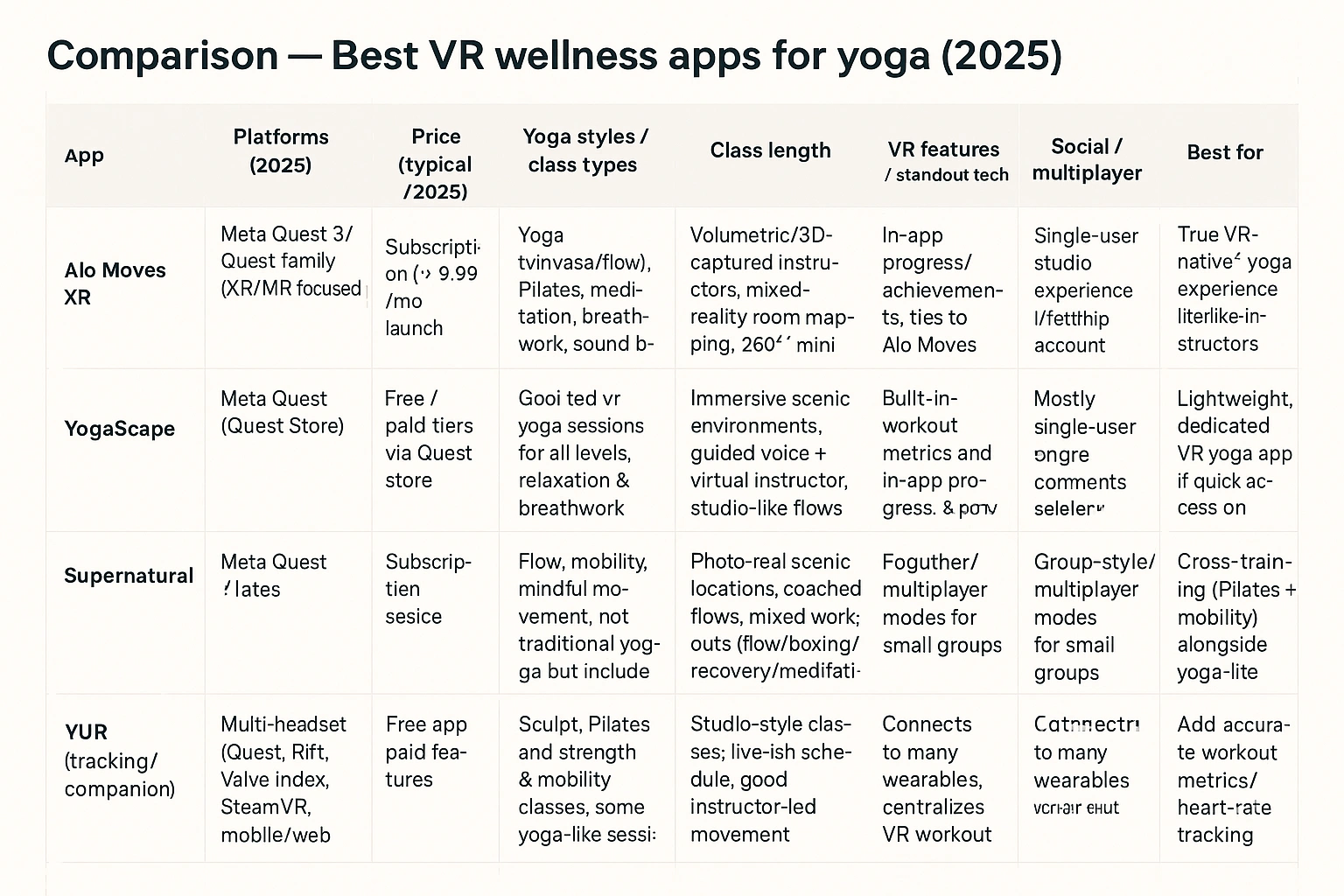
Comparison of the Best VR Yoga Apps 2025
| App | Style | Key Feature | Price Model | Best For |
|---|---|---|---|---|
| Alo Moves VR | Studio Yoga | Premium Instruction | Subscription | A True Yoga Class |
| Exhale XR | Holistic Wellness | Breath & Movement | Subscription | Mind-Body Connection |
| Maloka | Gamified Mindfulness | Gentle Movement | Free / One-Time | Habit Building |
| Guided Tai Chi | Mindful Movement | Balance & Flow | One-Time | Gentle Relaxation |
| TRIPP | Psychedelic Wellness | Immersive Stretching | Subscription | Deep Meditation |
Common Mistakes to Avoid in VR Yoga
To get the most from your virtual practice, be mindful of these common errors.
- Not Using a Real Yoga Mat: A mat is essential for grip and stability. Practicing on a slippery floor is unsafe.
- Pushing Poses Too Far: Without a live instructor to correct you, it’s important to listen to your body. Never push into pain.
- Forgetting to Breathe: Your breath is the most important part of yoga. Most apps have audio cues to remind you to inhale and exhale with the movements.
- Having a Cluttered Space: Even with virtual boundaries, ensure your physical space is clear so you can stretch fully without hitting anything.
- Choosing a Class That’s Too Advanced: Start with beginner flows to learn the fundamentals before jumping into more complex sequences.
Expert Tips for a Deeper Practice
Ready to deepen your practice? Follow these expert tips.
- Use Passthrough for Balance:
“For challenging balance poses, use your headset’s passthrough camera feature. This lets you see your real-world floor, giving you a stable point of reference to prevent wobbling,”
says a simulated yoga instructor.
- Create a Ritual: Light a candle or some incense before you start. Creating a pre-yoga ritual signals to your brain that it’s time to relax and focus.
- Focus on the Sensation, Not the Pose: Don’t worry about making the pose look perfect. Close your eyes (when safe) and focus on how the stretch feels in your body.
- End with Savasana (Corpse Pose): After your session, lie on your back for a few minutes in a quiet VR environment or with the headset off. This allows your body and mind to absorb the benefits of the practice.
FAQ – Frequently Asked Questions
Q: Can VR yoga actually replace a real yoga class?
A: For many people, yes. VR yoga provides expert instruction and a distraction-free environment. While it can’t offer the hands-on adjustments of a live instructor, it excels at providing consistent, on-demand classes for building a personal practice.
Q: Is VR yoga good for beginners?
A: It’s fantastic for beginners. VR provides a private, judgment-free space to learn poses at your own pace. You can try, fail, and try again without feeling self-conscious.
Q: Do I need a physical yoga mat to do VR yoga?
A: Yes, it is highly recommended. A yoga mat provides grip for your hands and feet, cushions your joints, and serves as a physical marker to help you stay within your play space.
Q: How much space do I need for VR yoga?
A: You need enough space to comfortably extend your arms and legs in all directions without hitting anything. A standard yoga mat (about 2×6 feet) plus a little extra room on all sides is a good guideline.
Q: Are there any free VR yoga apps?
A: Some wellness apps may offer a few free yoga or mindful movement sessions as a trial. However, most dedicated, high-quality VR yoga experiences require a one-time purchase or a subscription for full access to their class library.
Conclusion