
What is VR Sleep?
VR for sleep involves using a virtual reality headset to engage in guided wind-down routines specifically designed to prepare the mind and body for rest. These aren’t games; they are immersive experiences that use guided meditations, calming soundscapes, and gentle visuals to transition you from a state of alertness to a state of deep relaxation.
In 2025, this has become a key part of the “sleep tech” revolution. As the importance of sleep for overall health becomes more widely understood, people are turning to technology for solutions. A report from the Sleep Foundation highlights the growing market for devices that improve sleep, and **virtual relaxation apps** are at the cutting edge of this trend.
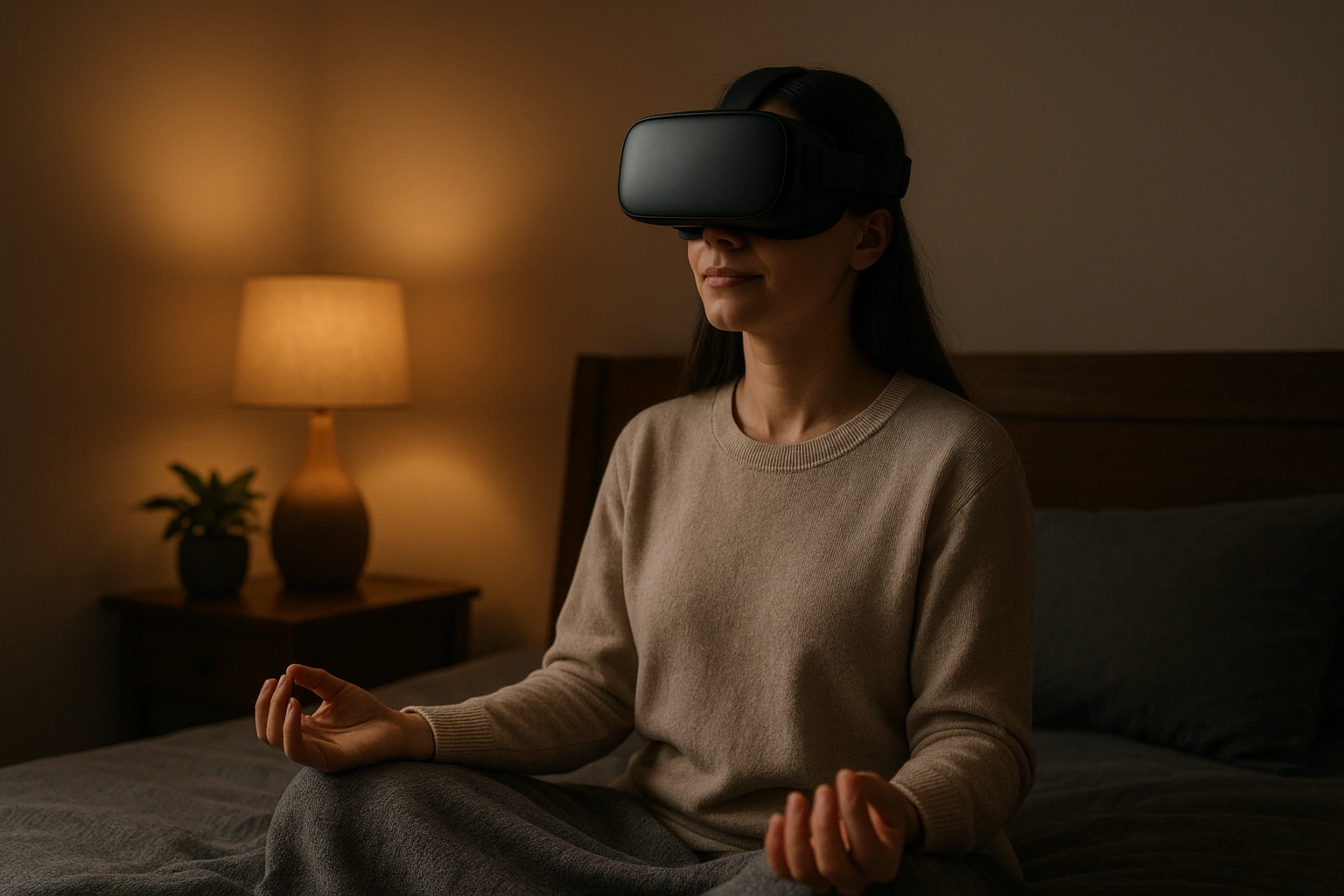
Why VR is a Powerful Tool for a Good Night’s Sleep
The main enemy of sleep is a racing mind. VR offers a unique and powerful way to quiet the noise.
It Creates a Digital Sanctuary
The biggest challenge when trying to sleep is shutting out the world. A VR headset is the ultimate tool for this. It physically blocks out light and replaces the sounds of your environment with calming audio, creating a perfect, isolated space to wind down, free from distractions.
It Guides Your Mind Away from Stress
Instead of ruminating on the day’s worries, VR gives your mind something peaceful to focus on. A guided meditation, a gentle breathing exercise, or simply watching a virtual campfire can effectively break the cycle of anxious thoughts that keeps you awake.
It Builds a Powerful Pre-Sleep Ritual
Our brains love routine. A consistent pre-sleep ritual signals to your body that it’s time to wind down. Making a 15-minute VR session part of this routine can create a powerful psychological trigger for sleep. Streamlining your daily tasks with tools like a virtual assistant can also reduce daytime stress, making it easier to relax at night.
Core Features of VR Sleep Apps
These apps are carefully designed with features to promote rest:
- Sleep-Specific Guided Meditations: Audio sessions focused on themes like body scans, letting go of worry, and preparing for deep sleep.
- Calming Soundscapes: Immersive audio environments, such as gentle rain, ocean waves, or ambient cosmic sounds, that help mask distracting noises.
- Breathing Exercises: Visual guides, like a slowly pulsing light, that help you slow your breathing and heart rate, calming your nervous system.
- Customizable Session Lengths: Choose a quick 5-minute wind-down or a longer 20-minute deep relaxation session to fit your needs.
In-Depth Reviews: The 5 Best VR Wellness Apps for Sleep in 2025
1. TRIPP
While known for its intense visuals, TRIPP’s “Calm” experiences are perfect for sleep. They feature mesmerizing, slowly evolving landscapes and binaural audio designed to guide your brainwaves toward a relaxed state. It also has a library of specific sleep meditations.
| Pros | Cons |
|---|---|
| Powerful audio-visuals that capture your attention. | Requires a subscription for full access. |
| Specific “Calm” and sleep-focused content. | The “Focus” trips can be too stimulating for bedtime. |
| Backed by scientific research. |
Best for: A powerful, immersive experience to break the cycle of a racing mind.
2. Guided Meditation VR
This app’s strength is its simplicity and vast library of locations. You can choose from over 100 serene, photorealistic environments and listen to a sleep-focused guided meditation or simply enjoy the calming ambient sounds of nature.
| Pros | Cons |
|---|---|
| Huge variety of calming, realistic locations. | The user interface is less modern than newer apps. |
| Hundreds of hours of guided meditations. | Less interactive than other options. |
| One-time purchase model offers great value. |
Best for: Pure escapism and finding your perfect, personal sanctuary to relax in.
3. Maloka
Maloka’s gentle, non-stimulating approach is ideal for a pre-sleep routine. Its short, calming meditations and mindful movement sessions are designed to relax, not energize. The act of tending to your virtual island is a wonderfully calming ritual.
| Pros | Cons |
|---|---|
| Gentle, calming, and rewarding gameplay loop. | Not specifically designed for sleep, but very effective. |
| Substantial free content available. | Meditations are shorter than in dedicated apps. |
| The island-building provides a sense of peaceful progress. |
Best for: Building a gentle, consistent, and rewarding pre-sleep mindfulness habit.
4. Supernatural
While famous for fitness, Supernatural’s meditation library is a hidden gem for sleep. You can sit in some of the most beautiful places on Earth and be guided through a wind-down session by their excellent coaches. The sheer beauty of the locations is incredibly relaxing.
| Pros | Cons |
|---|---|
| Unmatched, photorealistic 360° video locations. | Requires an expensive subscription. |
| High-quality guided meditations from great coaches. | Meditation is part of a larger fitness app. |
| New content added daily. |
Best for: A premium, escapist experience for those who also want a fitness solution.
5. Healium
Healium uses biofeedback from your smartwatch to teach you how to lower your heart rate and calm your nervous system—the perfect skill for bedtime. Seeing the virtual world respond to your state of calm is a powerful way to learn how to actively relax.
| Pros | Cons |
|---|---|
| Uses real-time biofeedback to teach relaxation. | Requires a smartwatch for the full experience. |
| Clinically validated to reduce stress. | Subscription-based. |
| A proactive tool for learning to control your stress response. |
Best for: A data-driven approach to actively learning how to calm your body for sleep.
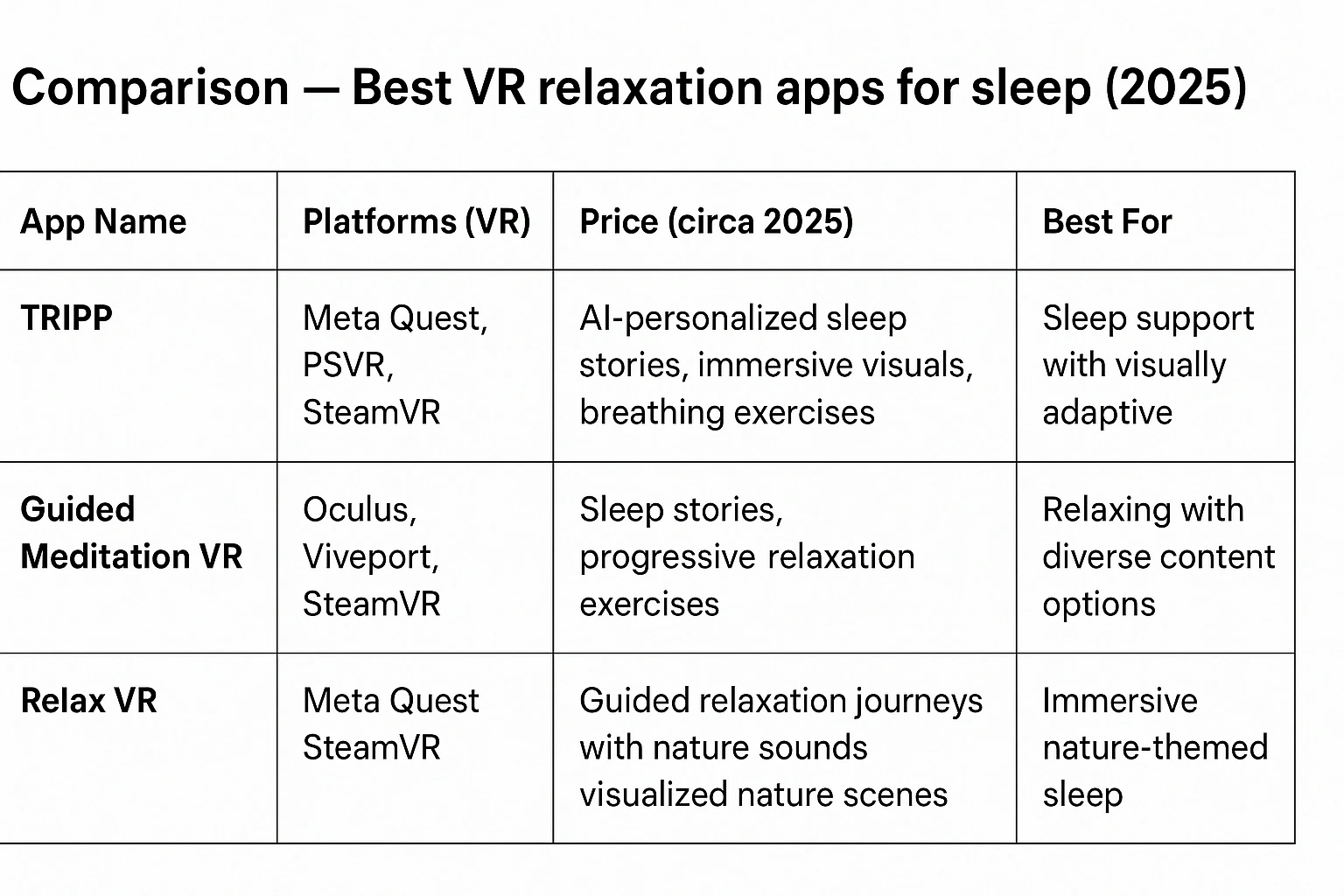
Comparison of the Best VR Wellness Apps for Sleep 2025
| App | Style | Key Sleep Feature | Price Model | Best For |
|---|---|---|---|---|
| TRIPP | Active Wellness | “Calm” Visual Trips | Subscription | Quieting a Racing Mind |
| Guided Meditation VR | Traditional | 100+ Nature Sanctuaries | One-Time | Pure Escapism |
| Maloka | Gamified | Gentle Wind-Down Ritual | Free / One-Time | Habit Building |
| Supernatural | Guided Escape | Real-World Scenery | Subscription | Premium Environments |
| Healium | Biofeedback | Heart Rate Control | Subscription | Learning to Relax |
Common Mistakes to Avoid When Using VR for Sleep
To get the most benefit, be mindful of these common pitfalls.
- Using a Stimulating Experience: Avoid high-energy games or even intense “Focus” meditations right before bed. Stick to content specifically labeled for calm or sleep.
- Having the Brightness Too High: Turn down the headset’s brightness and enable any “night shift” or blue-light-filtering modes to avoid disrupting your circadian rhythm.
- An Uncomfortable Position: Don’t try to lie flat on your back with the headset on. Use it while sitting comfortably in bed or a chair as a final step before you lie down to sleep.
- Aiming to Sleep *in* the Headset: Use VR as a tool to get you *to* the point of sleepiness, then take it off for a more comfortable night’s rest.
- Ignoring Other Sleep Hygiene: VR is a powerful tool, but it’s not a magic bullet. It works best when combined with other good habits like a consistent bedtime and avoiding caffeine late in the day.
Expert Tips for a Better Night’s Sleep
Ready to optimize your pre-sleep routine? Follow these expert tips.
- Create a “Sleep Sanctuary” Environment:
“Find one or two virtual locations that you find deeply calming and return to them each night. This consistency builds a powerful psychological association between that place and feeling sleepy,”
says a simulated sleep scientist.
- Use High-Quality Headphones: Blocking out all external noise is key. Good over-ear headphones will deepen the immersion and prevent household sounds from breaking your state of calm.
- Focus on the Body Scan: Many sleep meditations include a “body scan,” where you bring awareness to each part of your body. This is a highly effective technique for releasing physical tension you didn’t even know you were holding.
- Don’t Try to “Force” Sleep: The goal isn’t to force sleep, but to create the perfect conditions for it to happen naturally. Let go of the pressure to fall asleep and simply enjoy the relaxing experience.
FAQ – Frequently Asked Questions
Q: Is it bad to have a screen on my face right before sleep?
A: This is a valid concern due to blue light. However, VR headsets are different. They block out all ambient light, and many have a ‘night mode’ that reduces blue light. The content is also designed to be calming, unlike scrolling on a phone, making it a net positive for sleep preparation.
Q: Can I fall asleep with the VR headset on?
A: While you can, it’s generally not recommended for a full night’s sleep due to comfort and battery life. The best practice is to use the VR app as a 10-20 minute wind-down routine before taking the headset off to sleep.
Q: Do these apps actually work for insomnia?
A: For many people, yes. VR can be a powerful tool for breaking the cycle of anxiety and rumination that often causes insomnia. By providing an immersive distraction and guiding the user into a relaxed state, it can make it significantly easier to fall asleep.
Q: Are there any VR apps that track your sleep?
A: Currently, no VR apps track your sleep in the way a smartwatch or wearable ring does. They are designed as a tool to help you fall asleep, not to monitor you throughout the night.
Q: How long should a VR sleep session be?
A: Most experts recommend a session of 10 to 20 minutes. This is enough time to quiet the mind and relax the body without becoming too deeply immersed right before you intend to sleep.
Conclusion