
This is the promise of virtual reality as a tool for mental wellness. This guide is for anyone seeking refuge from the storm of anxiety. We are exploring the most effective VR relaxation apps of 2025, which use the power of immersion to soothe the nervous system and quiet the mind.
After reading this, you’ll know which apps are best for anxiety relief, the science behind how they work, and how to build a practice that provides a reliable sanctuary whenever you need it.
What Are VR Relaxation Apps?
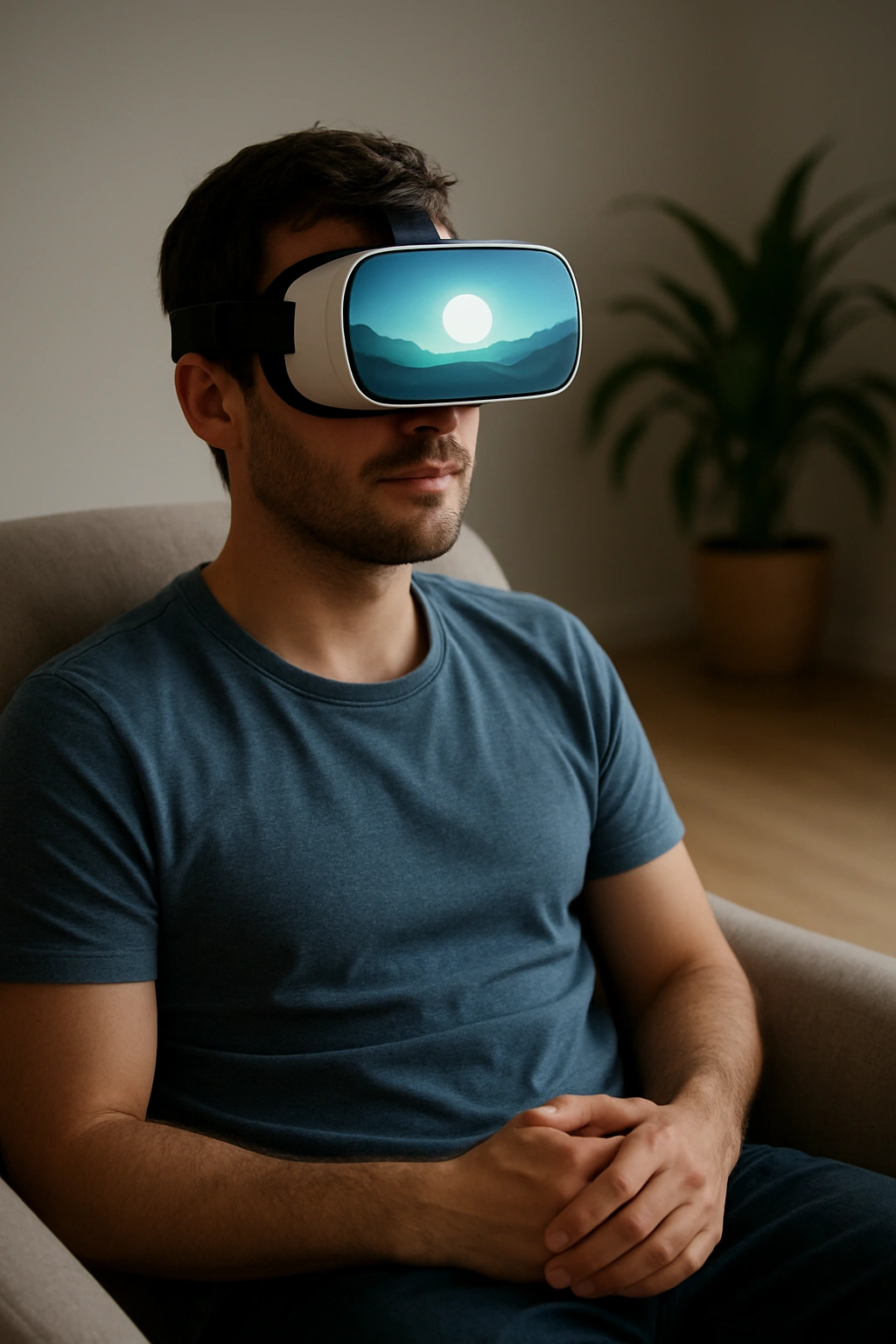
VR relaxation apps use a virtual reality headset to transport you to serene, immersive environments. They go beyond simple meditation by using a combination of guided audio, calming soundscapes, interactive elements, and breathtaking 360° visuals to actively engage your senses and guide you into a state of deep relaxation.
This is a rapidly growing field of **VR mental wellness tools**. The scientific community is taking note; a growing body of research, easily searchable on Google Scholar, demonstrates VR’s effectiveness in clinical settings for reducing anxiety and managing stress. Now, this powerful technology is available in our homes.
Why VR is a Powerful Tool Against Anxiety
Anxiety is often a cycle of racing, negative thoughts. VR is uniquely equipped to break that cycle.
It Hijacks Your Senses for Good
Anxiety keeps you trapped in your head. VR forces you out of it. By completely occupying your senses of sight and hearing, it doesn’t leave any “bandwidth” for anxious thoughts to take hold. You are gently forced into the present moment because the virtual world is your only reality.
It Activates the Body’s Relaxation Response
Many apps are built around principles of neuroscience. They use specific breathing exercises, binaural beats, and calming visuals to activate your parasympathetic nervous system—the body’s natural “brake pedal” for stress and anxiety.
It Provides a Safe, Controlled Environment
For those with specific phobias or social anxiety, VR can provide a safe space to practice mindfulness without the triggers of the real world. It’s a personal sanctuary that is always available. Managing daily stressors with tools like a virtual assistant can also lower your baseline anxiety, making these practices even more effective.
Core Features of VR Relaxation Apps
These apps use a suite of tools to guide you to a state of calm:
- Guided Meditations for Anxiety: Specific audio sessions focused on calming anxious thoughts, managing panic, and cultivating a sense of safety.
- Immersive Nature Escapes: A library of photorealistic or beautifully stylized natural environments, from beaches and forests to underwater reefs.
- Interactive Calming Activities: Gentle, focus-driven tasks like building a stack of stones, tending a virtual garden, or simply watching the stars.
- Biofeedback Mechanisms: Advanced apps use your real-time heart rate from a smartwatch to influence the virtual world, showing you the direct impact of your calm state.
In-Depth Reviews: The 5 Best VR Relaxation Apps of 2025
1. Healium
Healium is a clinically validated tool for anxiety reduction. It uses biofeedback from your smartwatch or EEG headband to power the experience. The calmer you become, the more vibrant the virtual world gets, creating a powerful, positive feedback loop.
| Pros | Cons |
|---|---|
| Uses real-time biofeedback to teach self-regulation. | Requires external hardware for the full experience. |
| Backed by clinical trials for stress and anxiety reduction. | Subscription-based model. |
| Visually seeing your calm have an effect is very powerful. |
Best for: A data-driven, scientifically-backed approach to learning how to control your anxiety.
2. Guided Meditation VR
This app is the ultimate virtual escape. It offers a massive library of over 100 stunning, photorealistic locations. If your anxiety stems from feeling trapped or overwhelmed by your surroundings, this app offers an instant vacation for your mind.
| Pros | Cons |
|---|---|
| Unmatched variety of realistic, escapist environments. | The user interface is a bit dated. |
| Hundreds of hours of anxiety-focused meditations. | Less interactive than other apps. |
| One-time purchase model offers incredible value. |
Best for: Pure escapism and finding a personal sanctuary to de-stress.
3. TRIPP
TRIPP is designed to capture your full attention, making it a powerful tool for breaking anxious thought cycles. Its “Calm” experiences use mesmerizing visuals and guided breathing exercises to ground you in the present moment.
| Pros | Cons |
|---|---|
| Powerful visuals are excellent for interrupting rumination. | Requires a subscription for full access. |
| Specific “Calm” content designed for relaxation. | The intense visuals can be overstimulating for some. |
| Daily content keeps the practice fresh. |
Best for: An active, engaging mindfulness session to break out of a racing mind.
4. Maloka
Maloka offers a gentle, nurturing approach to anxiety relief. The act of tending to your own private island through short, simple meditations and breathing exercises is inherently calming and provides a sense of control and peaceful progression.
| Pros | Cons |
|---|---|
| Gamified approach is great for building a consistent habit. | Less intense than other apps. |
| A lot of content is available for free. | Not specifically focused on clinical anxiety. |
| The island-building ritual is very soothing. |
Best for: A gentle, rewarding, and low-pressure way to build a daily relaxation habit.
5. Nature Treks VR
This app is pure, unguided relaxation. It places you in a series of beautiful, stylized natural environments that you can freely explore. You can control the weather, discover animals, and simply exist in a peaceful world without any goals or pressure.
| Pros | Cons |
|---|---|
| Total freedom to explore and relax at your own pace. | No guided meditations or structured exercises. |
| Beautiful, calming art style and sound design. | Less of a “tool” and more of an “experience.” |
| One-time purchase model. |
Best for: Unguided exploration and finding a sense of wonder to combat anxiety.
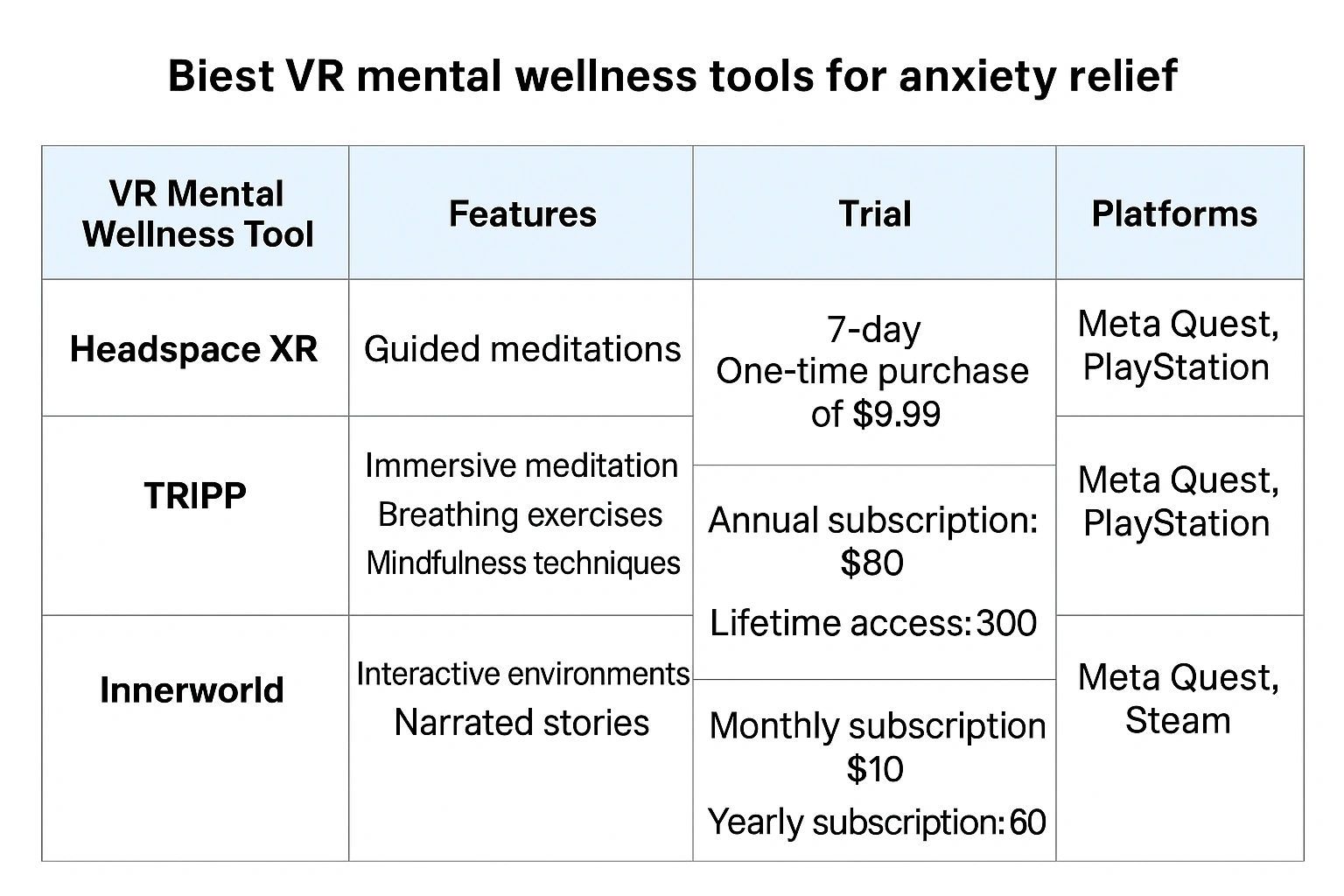
Comparison of the Best VR Relaxation Apps 2025
| App | Style | Key Anxiety Feature | Price Model | Best For |
|---|---|---|---|---|
| Healium | Biofeedback | Mind-Powered Calm | Subscription | Learning Self-Regulation |
| Guided Meditation VR | Traditional | 100+ Escapist Worlds | One-Time | Pure Escapism |
| TRIPP | Active Wellness | Interrupting Thought Loops | Subscription | A Racing Mind |
| Maloka | Gamified | Gentle Habit Building | Free / One-Time | Consistent Practice |
| Nature Treks VR | Exploration | Unguided Peace | One-Time | Finding Wonder |
Common Mistakes to Avoid When Using VR for Anxiety
To get the most benefit, be mindful of these common pitfalls.
- Expecting an Instant Cure: These are tools to help you manage anxiety, not magic wands. The benefits come from consistent practice.
- Choosing an Overstimulating Experience: What one person finds relaxing, another might find overwhelming. If an app’s visuals are too intense, try something with a more natural, grounded aesthetic.
- An Uncomfortable Setup: Physical discomfort will undermine any attempt at mental relaxation. Take time to adjust your headset for a perfect, comfortable fit.
- Trying to “Fight” Anxious Thoughts: The goal is not to stop your thoughts, but to acknowledge them without judgment and gently guide your focus back to the app.
- Using it Only During a Crisis: While great for acute moments, the real power of these apps comes from building a regular practice that raises your baseline level of calm over time.
Expert Tips for a Calmer Mind
Ready to deepen your practice? Follow these expert tips.
- Pair it with Aromatherapy:
“Engaging multiple senses deepens the experience. Use a diffuser with a calming scent like lavender or chamomile during your VR session to create a powerful multi-sensory relaxation ritual,”
says a simulated wellness expert.
- Find a Comfortable, Safe Space: Use the app in a quiet room where you know you won’t be disturbed. Sit in a comfortable chair that supports your back.
- Focus on Your Breath: No matter what’s happening on screen, your breath is your anchor. The core of every app is guiding you back to the simple, calming rhythm of your own breathing.
- Create a “Calm Down” Routine: Use the same 10-minute session from your favorite app every time you feel overwhelmed. This builds a conditioned response, making the routine more effective over time.
FAQ – Frequently Asked Questions
Q: Can VR apps genuinely help with clinical anxiety?
A: While VR relaxation apps are a powerful tool for managing day-to-day stress and anxious feelings, they are not a substitute for professional medical advice or therapy. They can be an excellent complementary tool used alongside traditional treatments.
Q: How is VR relaxation different from just watching a calming video?
A: The key difference is immersion. A VR headset blocks out your physical surroundings entirely, tricking your brain into feeling truly ‘present’ in the virtual environment. This makes it much more effective at breaking the cycle of anxious thoughts than a 2D screen.
Q: How long should I use a VR relaxation app for?
A: Even a short session of 10 to 15 minutes can have a significant impact on your nervous system. Consistency is more important than duration. A short daily practice is more beneficial than a long, infrequent one.
Q: Are there any risks of using VR for anxiety?
A: For relaxation apps, the risks are very low. Unlike fast-paced games, these experiences are designed to be stationary and comfortable, so motion sickness is extremely rare. The main thing is to choose an experience that you personally find calming, not overstimulating.
Q: What is the best type of VR app for a panic attack?
A: For acute moments of high anxiety or panic, an app with a strong, guided breathing exercise is often the most effective tool. Apps like TRIPP or Healium, which provide clear visual anchors for the breath, can be excellent for grounding yourself.
Conclusion