
After reading this, you’ll understand how this immersive technology can be a powerful ally in your mental wellness journey.
What is VR Meditation Mental Health?
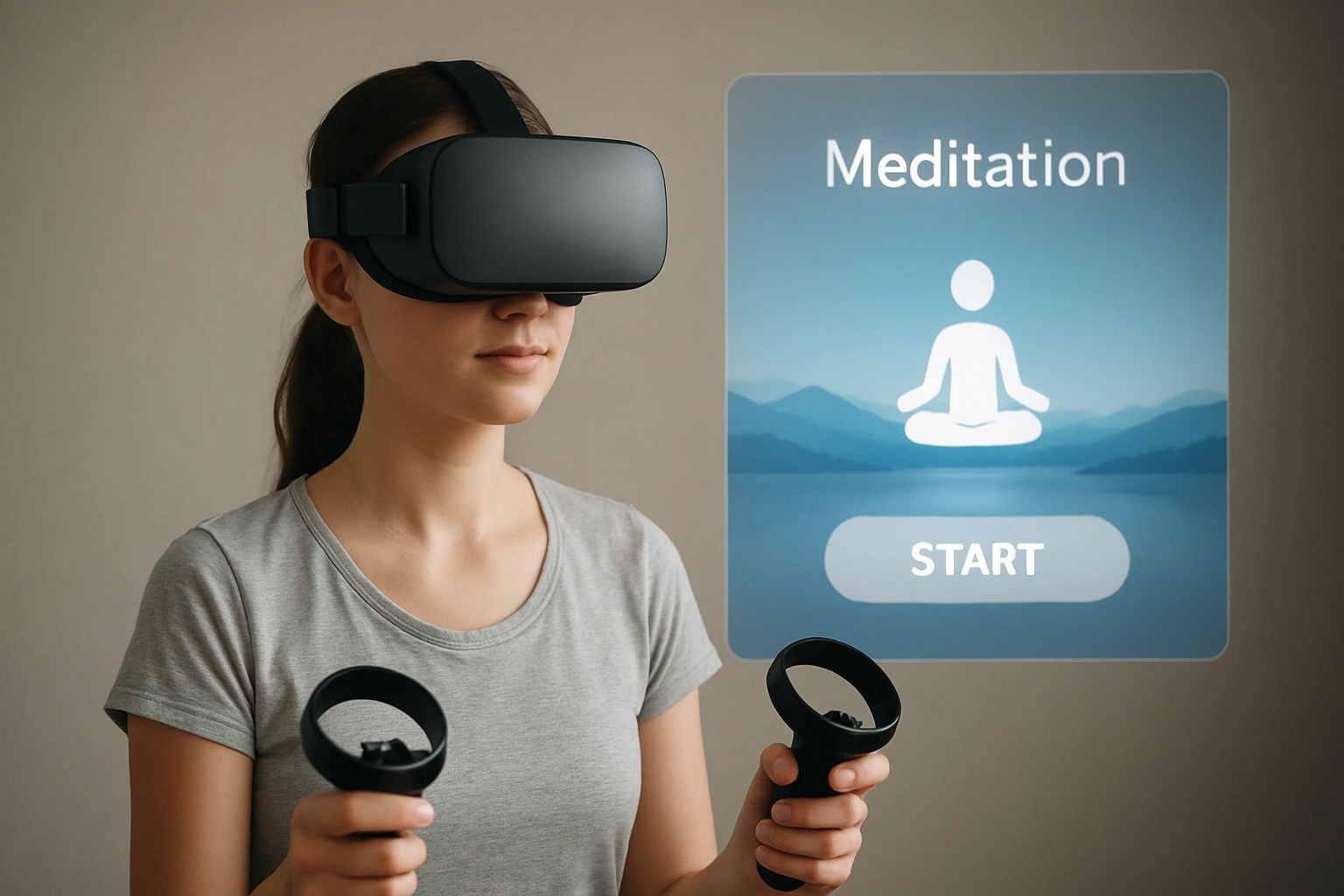
VR meditation is the practice of using a virtual reality headset to engage in mindfulness, breathwork, and relaxation exercises within a completely immersive, distraction-free digital environment. By taking full control of your sight and hearing, it creates a unique space to disconnect from external stressors and focus entirely on your inner state.
This is a cornerstone of the emerging field of digital therapeutics. The use of technology to deliver evidence-based therapeutic interventions is a major trend in healthcare. As documented in numerous studies found on Google Scholar, VR is being clinically studied and used for everything from anxiety reduction to phobia treatment, highlighting the powerful **VR wellness benefits**.
The Core Mental Health Benefits of VR Meditation
The benefits of a consistent VR meditation practice extend far beyond simple relaxation.
Significant Reduction in Stress and Anxiety
This is the most immediate benefit. Anxiety often traps us in a loop of “what-if” thoughts. VR’s immersive nature is a powerful tool for breaking this cycle. By commanding your full attention, it doesn’t leave mental bandwidth for anxious rumination. Furthermore, guided breathing exercises activate the parasympathetic nervous system, your body’s natural “calm down” switch.
Improved Focus and Attention Control
In a world of constant distraction, the ability to focus is a superpower. Mindfulness is essentially attention training. VR apps provide clear visual and auditory anchors for your focus, whether it’s a pulsing light for your breath or a guided narration. Practicing this regularly strengthens your ability to direct your attention in daily life.
Enhanced Emotional Regulation
Mindfulness practice helps you become an observer of your thoughts and feelings, rather than a victim of them. By consistently practicing in the safe, controlled environment of VR, you learn to create a space between a trigger and your reaction. This leads to less reactivity and a greater sense of control over your emotions. For more on optimizing your life, see how a virtual assistant can boost productivity and reduce stress.
How VR Trains Your Brain for Calm
VR’s effectiveness comes from its ability to leverage several key psychological principles:
- Sensory Immersion: By blocking out the real world, VR eliminates the external triggers and distractions that fuel anxiety, making it easier to achieve a meditative state.
- Guided Attention: Clear, simple instructions and visual cues (like a breathing guide) give a wandering mind a specific task, making the abstract concept of “focus” a concrete action.
- Positive Reinforcement: Apps that use gamification (like Maloka) or biofeedback (like Healium) provide a sense of accomplishment and visible proof that your efforts are working, which encourages you to build a consistent habit.
Reviewing the Top Apps for Mental Wellness in 2025
1. Healium
Healium is a clinically-validated tool for anxiety and stress. Its standout feature is biofeedback: by connecting to a smartwatch, your own heart rate controls the experience. The calmer you become, the more vibrant the virtual world gets, teaching you active self-regulation.
| Pros for Mental Health | Cons for Mental Health |
|---|---|
| Provides direct, visible proof of your ability to calm yourself. | Requires a smartwatch for the full experience. |
| Backed by clinical trials for reducing anxiety. | Subscription-based model. |
Best for: A data-driven approach to actively learning how to manage your body’s stress response.
2. TRIPP
TRIPP is designed to capture your full attention, making it incredibly effective at breaking the cycle of anxious, racing thoughts. Its powerful, psychedelic visuals and guided breathing exercises are a potent combination for grounding you in the present moment.
| Pros for Mental Health | Cons for Mental Health |
|---|---|
| Excellent for interrupting rumination and anxious thought loops. | The intense visuals can be overstimulating for some. |
| Daily updated content helps build a consistent habit. | Requires a subscription. |
Best for: An active, engaging session to quiet a busy or anxious mind.
3. Maloka
Maloka takes a gentle, nurturing approach to mental wellness. The core loop of practicing short meditations to grow your own private zen island is inherently calming and rewarding. It’s a low-pressure way to build a positive daily habit.
| Pros for Mental Health | Cons for Mental Health |
|---|---|
| Gamified progress provides a sense of accomplishment. | Less focus on deep, clinical topics. |
| A lot of content is available for free. |
Best for: Beginners who want a gentle and rewarding way to build a daily mindfulness practice.
Comparison of VR Apps for Mental Health 2025
| App | Primary Strength | Price Model | Best For |
|---|---|---|---|
| Healium | Biofeedback | Subscription | Anxiety & Self-Regulation |
| TRIPP | Deep Immersion | Subscription | A Racing Mind & Focus |
| Maloka | Gamification | Free / One-Time | Building a Gentle Habit |
Common Mistakes to Avoid for Mental Wellness
To get the most benefit, be mindful of these common pitfalls.
- Expecting an Instant Cure: These are tools for practice, not a magic pill. The benefits for mental health compound over time with consistent use.
- Forcing Relaxation: You can’t force your mind to be quiet. The goal of mindfulness is to notice your thoughts without judgment and gently guide your attention back to the practice.
- An Uncomfortable Setup: Physical discomfort is a major distraction. Take time to adjust your headset and find a comfortable, supportive seated position.
- Using it Only When You’re Stressed: While helpful in a crisis, the real power comes from building a baseline of calm through a regular, proactive practice.
Expert Tips for a Deeper Practice
Ready to deepen your practice? Follow these expert tips.
- Use High-Quality Headphones:
“The audio component—the guided narration, the binaural beats, the soundscapes—is just as important as the visuals. Good headphones are essential for blocking out the world and achieving full immersion,”
says a simulated wellness expert.
- Create a Ritual: Dedicate a specific time and quiet space for your practice each day. This consistency creates a powerful psychological cue for your mind to relax.
- Focus on the Breath: Your breath is your anchor. No matter what app you use, the core practice is always returning your attention to the simple, physical sensation of your breath.
- Bring Mindfulness Off the Mat: The goal is to take the skills you learn in VR into your daily life. Practice taking a few mindful breaths before a meeting or while waiting in line.
FAQ – Frequently Asked Questions
Q: Can VR meditation replace therapy?
A: No. VR meditation is a powerful tool for managing day-to-day stress and building mindfulness skills, but it is not a substitute for professional therapy or medical treatment for clinical mental health conditions. It can be an excellent complementary tool, however.
Q: How is VR meditation more effective than just using a phone app?
A: The key benefit is total immersion. A VR headset blocks out all external visual and auditory distractions, which is often the biggest hurdle for people trying to meditate. This makes it easier to stay present and focused compared to a 2D screen in a distracting environment.
Q: How long does it take to feel the mental health benefits?
A: While a single session can provide immediate stress relief, the long-term benefits for mental health, such as improved focus and emotional regulation, come from consistent practice. Many users report feeling a noticeable difference after just a week of daily 10-15 minute sessions.
Q: Is VR meditation suitable for people with severe anxiety?
A: It can be, as it provides a controlled, safe environment. However, individuals with severe anxiety should consult with a healthcare professional before starting any new wellness practice. For some, the sensory experience could be overwhelming, so starting with short, simple sessions is recommended.
Q: Are there any scientifically proven benefits to VR meditation?
A: Yes. A growing body of research shows that VR is effective for stress and anxiety reduction. Apps like Healium are clinically validated, and the core principles of mindfulness and breathwork that all these apps use are extensively backed by scientific evidence.
Conclusion