
After reading this, you’ll know which apps offer the best guidance, how they work, and how you can use them to build a life-changing daily habit.
What Are VR Breathing Exercises?
VR breathing exercises use a virtual reality headset to guide you through various breathwork techniques in an immersive, distraction-free environment. Instead of just listening to an audio guide, you interact with beautiful visual cues—like a pulsing orb of light or an expanding geometric shape—that are perfectly synchronized to your inhales and exhales.
This is a key part of the growing **virtual wellness exercises** trend. The science is clear: controlled breathing is one of the fastest ways to calm the nervous system. As documented by sources like Harvard Health, breathwork can effectively combat the body’s fight-or-flight response. VR simply makes this practice easier and more engaging than ever before.

Why VR is a Game-Changer for Breathwork
Focusing on the breath is simple, but it’s not always easy. VR solves the most common challenges beginners face.
It Provides an Anchor for Your Attention
When you’re told to “focus on your breath,” where do you look? What do you do? A VR breathing app gives you a clear, beautiful visual to anchor your attention to. Following the pulsing light with your breath is intuitive and keeps your mind from wandering.
It Creates a Distraction-Free Zone
It’s hard to focus on your breath when you can see your email notifications or hear a conversation in the next room. A VR headset instantly removes these external distractions, creating an isolated sanctuary where your only task is to breathe.
It Makes the Invisible, Visible
The effects of breathwork can feel subtle at first. Apps with biofeedback, like Healium, can show you in real-time how your controlled breathing is lowering your heart rate, providing powerful, motivating reinforcement. Streamlining your daily life with a virtual assistant can also reduce stress, making these practices even more effective.
Core Features of VR Breathing Apps
These apps are designed with specific tools to guide your practice:
- Visual Breathing Guides: The core feature. These are animated visuals (like orbs, flowers, or geometric patterns) that expand on your inhale and contract on your exhale.
- Guided Breathwork Sessions: Audio narration from instructors who lead you through specific techniques like box breathing, 4-7-8 breathing, or resonant breathing.
- Calming Environments: A selection of serene 360° locations, from peaceful nature scenes to abstract cosmic voids, to help you relax.
- Biofeedback: Advanced apps can connect to a smartwatch to use your live heart rate data to influence the experience, giving you direct feedback on your state of calm.
In-Depth Reviews: The 5 Best VR Breathing Apps of 2025
1. TRIPP
TRIPP is a masterclass in using visuals to guide the mind. Its “Calm” experiences are built around breathtaking, evolving fractals and landscapes that are perfectly synchronized with guided breathing exercises. It’s a powerful tool for breaking anxious thought loops.
| Pros | Cons |
|---|---|
| Stunning visuals that make it easy to focus. | Requires a subscription for full access. |
| Specific content for “Calm” and breathwork. | The intense visuals may not be for everyone. |
| Backed by scientific research. |
Best for: A powerful, visually-driven breathwork session that captures your full attention.
2. Maloka
Maloka offers a gentle and rewarding approach to breathwork. It features simple, guided breathing exercises in a calming environment. Each session helps you cultivate your own private zen island, which makes the practice feel purposeful and encourages consistency.
| Pros | Cons |
|---|---|
| Gamified approach is great for building a daily habit. | Breathing exercises are simple, not deeply varied. |
| A lot of content is available for free. | Less structured than dedicated breathwork apps. |
| Your personal island provides a sense of progress. |
Best for: Beginners who want a gentle, gamified, and rewarding way to start a breathing practice.
3. Healium
Healium is built around the power of breath. It uses biofeedback from your smartwatch or other sensors to translate your state of calm into action. As your breathing slows your heart rate, you can make plants grow or hatch butterflies, providing a direct, visible reward for your relaxation efforts.
| Pros | Cons |
|---|---|
| Uses real-time biofeedback to teach self-regulation. | Requires external hardware for the full experience. |
| Clinically validated to reduce stress in minutes. | Subscription-based model. |
| Visually seeing your breath’s effect is very powerful. |
Best for: A data-driven approach to mastering your body’s stress response through breath.
4. Exhale XR
As the name suggests, this app is dedicated to the art of breath. It offers a variety of guided breathwork sessions, from simple relaxation to more energizing techniques, all set in beautifully stylized and calming virtual worlds. It’s a focused, dedicated tool for breathwork.
| Pros | Cons |
|---|---|
| Dedicated focus on a variety of breathwork techniques. | Smaller library than all-in-one wellness apps. |
| Beautiful, relaxing art style. | Subscription-based model. |
| Excellent for learning different breathing patterns. |
Best for: Those who want to explore different breathwork techniques in a focused app.
5. Guided Meditation VR
While offering a broad range of meditations, many of its core sessions are fundamentally breath-focused. You can relax in hundreds of realistic locations while an instructor guides you to focus on your inhales and exhales, using the serene environment as your backdrop.
| Pros | Cons |
|---|---|
| Huge library of calming, realistic environments. | Breathing is a component, not the sole focus. |
| Simple, effective, and easy to use. | Lacks interactive visual breathing guides. |
| One-time purchase model. |
Best for: A simple, traditional meditation practice with a strong emphasis on breath.
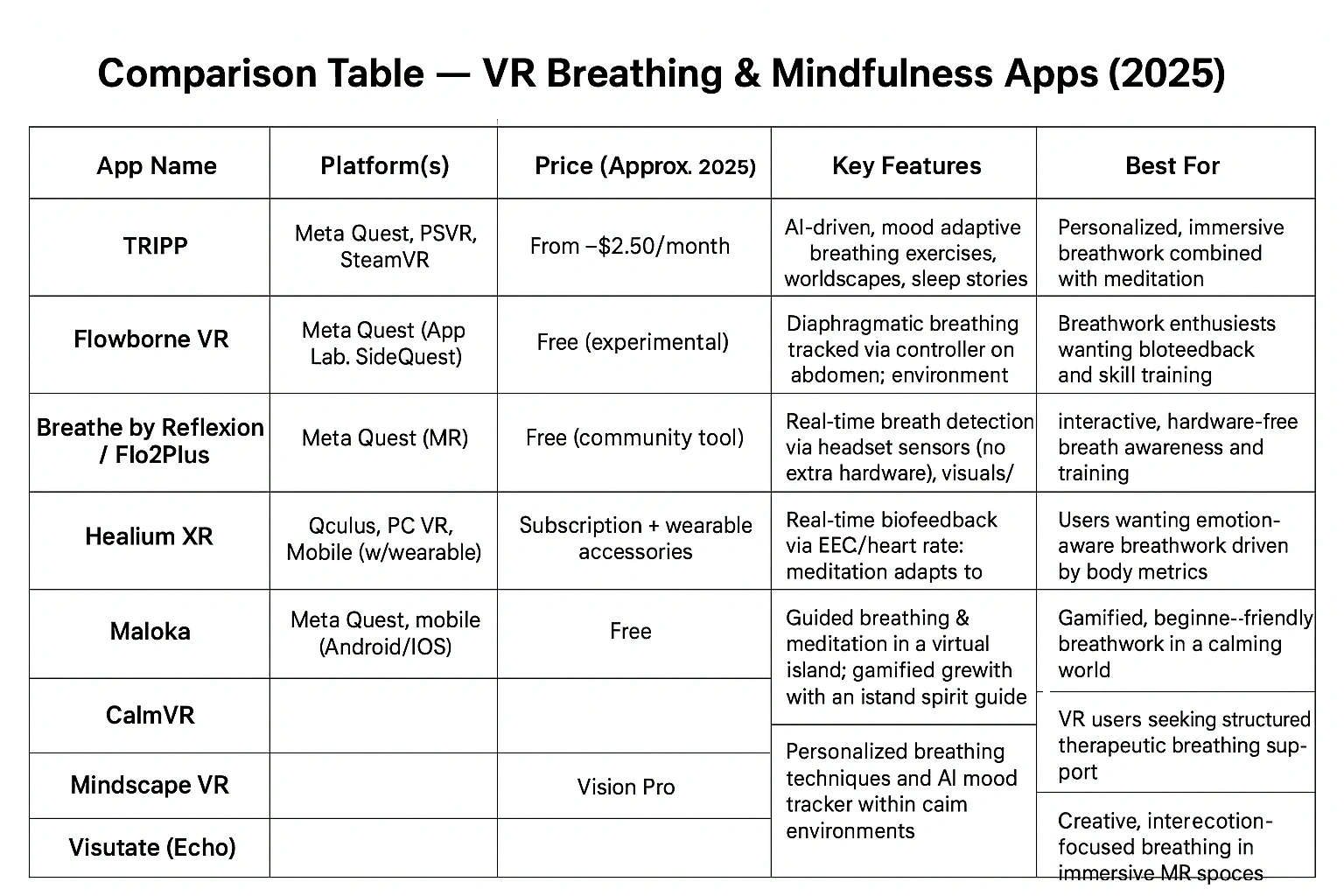
Comparison of the Best VR Breathing Apps 2025
| App | Style | Key Breathing Feature | Price Model | Best For |
|---|---|---|---|---|
| TRIPP | Active Wellness | Synchronized Visuals | Subscription | Deep Focus |
| Maloka | Gamified | Gentle, Rewarding Practice | Free / One-Time | Habit Building |
| Healium | Biofeedback | Heart Rate Visualization | Subscription | Mind-Body Control |
| Exhale XR | Dedicated Breathwork | Variety of Techniques | Subscription | Learning Breathwork |
| Guided Meditation VR | Traditional | Guided Narration | One-Time | Relaxing Escapism |
Common Mistakes to Avoid in VR Breathwork
To get the most from your practice, be mindful of these common errors.
- Shallow Chest Breathing: The goal is deep, diaphragmatic “belly” breathing. Make sure you feel your stomach expand as you inhale.
- Forcing the Breath: Don’t try to inhale or exhale with force. The goal is a gentle, natural rhythm. Let the app’s visual guide set the pace.
- Holding Tension in Your Body: Relax your shoulders, jaw, and hands. Physical tension makes it harder to breathe deeply.
- Getting Frustrated: Your mind will wander. That’s normal. The practice is not about having a perfectly clear mind, but about gently returning your focus to the breath each time you notice it has strayed.
- Inconsistency: A short, daily practice is far more effective than a long, infrequent one.
Expert Tips for a Deeper Breathing Practice
Ready to master your breath? Follow these expert tips.
- Use High-Quality Headphones:
“The audio cues, binaural beats, and calming soundscapes are 50% of the experience. Good headphones block out the world and let you fully immerse in the sound,”
says a simulated wellness expert.
- Find a Comfortable Seated Position: Sit upright in a chair with your feet flat on the floor. This posture allows your diaphragm to move freely.
- Try Box Breathing: A simple and powerful technique. Inhale for a count of 4, hold for 4, exhale for 4, and hold for 4. Many apps have a specific mode for this.
- Take It With You: Once you’ve learned the rhythm from the app, you can use these breathing techniques anywhere—before a meeting, in traffic, or anytime you feel stressed.
FAQ – Frequently Asked Questions
Q: Is VR better than a phone app for breathing exercises?
A: For many people, yes. The key advantage of VR is total immersion. It blocks out visual and auditory distractions from your environment, making it significantly easier to focus solely on your breath and the guided visuals.
Q: Can VR breathing apps help with anxiety or panic attacks?
A: Yes, they can be a powerful tool. By guiding you through controlled breathing, these apps can help activate your parasympathetic nervous system, which calms your body’s stress response. They are excellent for grounding yourself during moments of high anxiety.
Q: How long should I practice with a VR breathing app?
A: Consistency is more important than duration. A daily practice of just 5 to 10 minutes can have a significant positive impact on your stress levels and overall sense of well-being.
Q: Do I need any special accessories?
A: No accessories are required to start. However, some advanced apps like Healium can be enhanced by pairing them with a smartwatch or other biometric sensor to provide real-time biofeedback.
Q: What is the best breathing technique to learn?
A: The most fundamental technique taught in these apps is diaphragmatic breathing, or ‘belly breathing.’ This technique involves deep inhales that engage your diaphragm, which is key to activating the body’s relaxation response.
Conclusion