Introduction
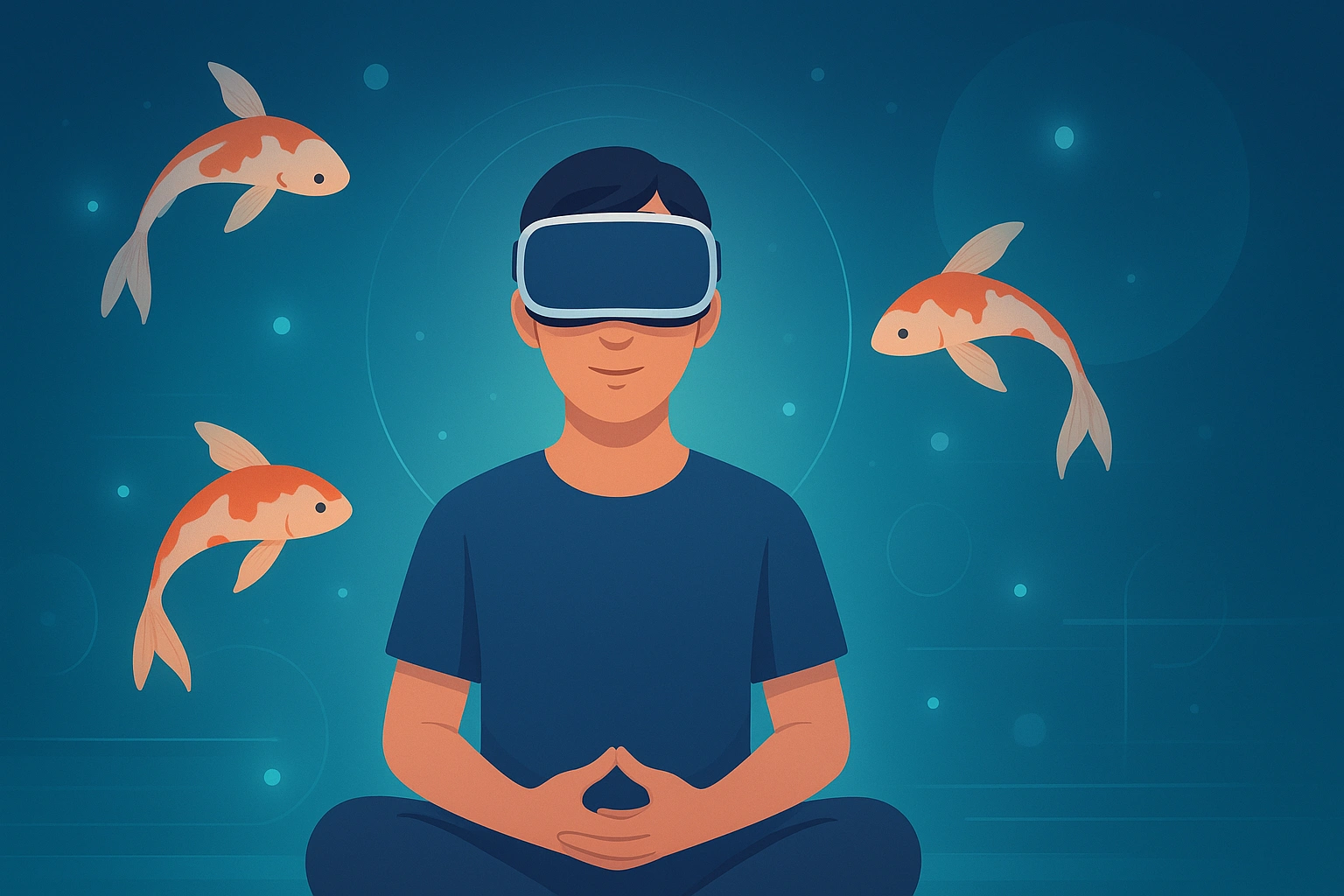
In our hyper-connected world, rates of anxiety and burnout are at an all-time high. Traditional mental health support, while important, can be inaccessible or costly. VR wellness apps offer a serene, therapeutic space on demand, right from the privacy of your own home. By using VR wellness apps, individuals can access guided meditation, stress relief exercises, and interactive therapy anytime. The future of VR wellness apps shows how these tools are transforming mental healthcare, making support more engaging, accessible, and personalized.
This guide explores how virtual reality is moving beyond gaming and fitness to become a powerful tool for mental and emotional well-being. VR wellness apps are leading this shift, offering interactive ways to reduce stress, practice mindfulness, and support therapy. By examining VR wellness apps, we can see how science-backed experiences make mental healthcare more accessible and engaging. The upcoming VR wellness apps provide new avenues for personal growth and emotional balance, showing how VR wellness apps are redefining virtual health for everyone.
What Are VR Wellness Apps?
VR wellness apps are immersive, interactive experiences designed to support mental and emotional health. Unlike fitness apps that focus on physical exertion, these applications create controlled, calming environments for activities like guided meditation, mindfulness exercises, anxiety reduction, and even simulated therapy sessions.
The relevance of this technology in 2025 is critical. As the global conversation around mental health intensifies, the demand for accessible digital solutions is soaring. The digital mental health market is already a multi-billion dollar industry, and as reported by publications like Wired, VR is poised to capture a significant share by offering a level of immersion and efficacy that traditional 2D apps cannot match. This is the next step in the evolution of digital self-care.
Why VR is a Breakthrough for Mental Wellness
Virtual reality’s unique ability to command a user’s sensory attention makes it a uniquely powerful tool for the mind. It offers benefits that go far beyond what a smartphone app can provide.
Immersive Escapism for Profound Stress Reduction
The core strength of VR is its power to generate “presence”—the feeling of actually being in another place. This is a game-changer for stress management.
- Blocking Out Distractions: A VR headset completely blocks out the physical world, eliminating external distractions and allowing for deeper focus during meditation or mindfulness.
- Transportive Environments: Apps can transport you to a tranquil beach, a peaceful forest, or even outer space, providing a powerful mental break from stressful surroundings.
- Pain and Anxiety Management: Hospitals and clinics are already using VR to reduce pain and anxiety during medical procedures by redirecting the brain’s attention.
Accessible, Stigma-Free Mental Health Support
For many, seeking help is the hardest step. VR offers a private and accessible first step into mental wellness practices.
- Privacy and Anonymity: Users can explore mindfulness techniques or confront anxieties in the complete privacy of their own homes.
- On-Demand Access: A calming experience is available 24/7, providing immediate support during moments of high stress or anxiety.
- Lowering the Barrier: VR can serve as a gentle introduction to mental health concepts for those who may be hesitant to speak with a therapist.
A Platform for Next-Generation Therapeutic Techniques
VR is not just for relaxation; it’s a clinical tool. It’s becoming a key platform for proven therapeutic methods like Cognitive Behavioral Therapy (CBT) and Exposure Therapy. Organizing appointments and wellness sessions can be managed effectively with tools like a Virtual Assistant Biz ID.
The Core Technologies of Virtual Wellness
The magic of these apps lies in a combination of immersive visuals, responsive audio, and intelligent feedback systems:
- Guided Meditation and Mindfulness: A calming voice guides you through breathing exercises while the virtual world responds, perhaps with visuals that sync to your breath.
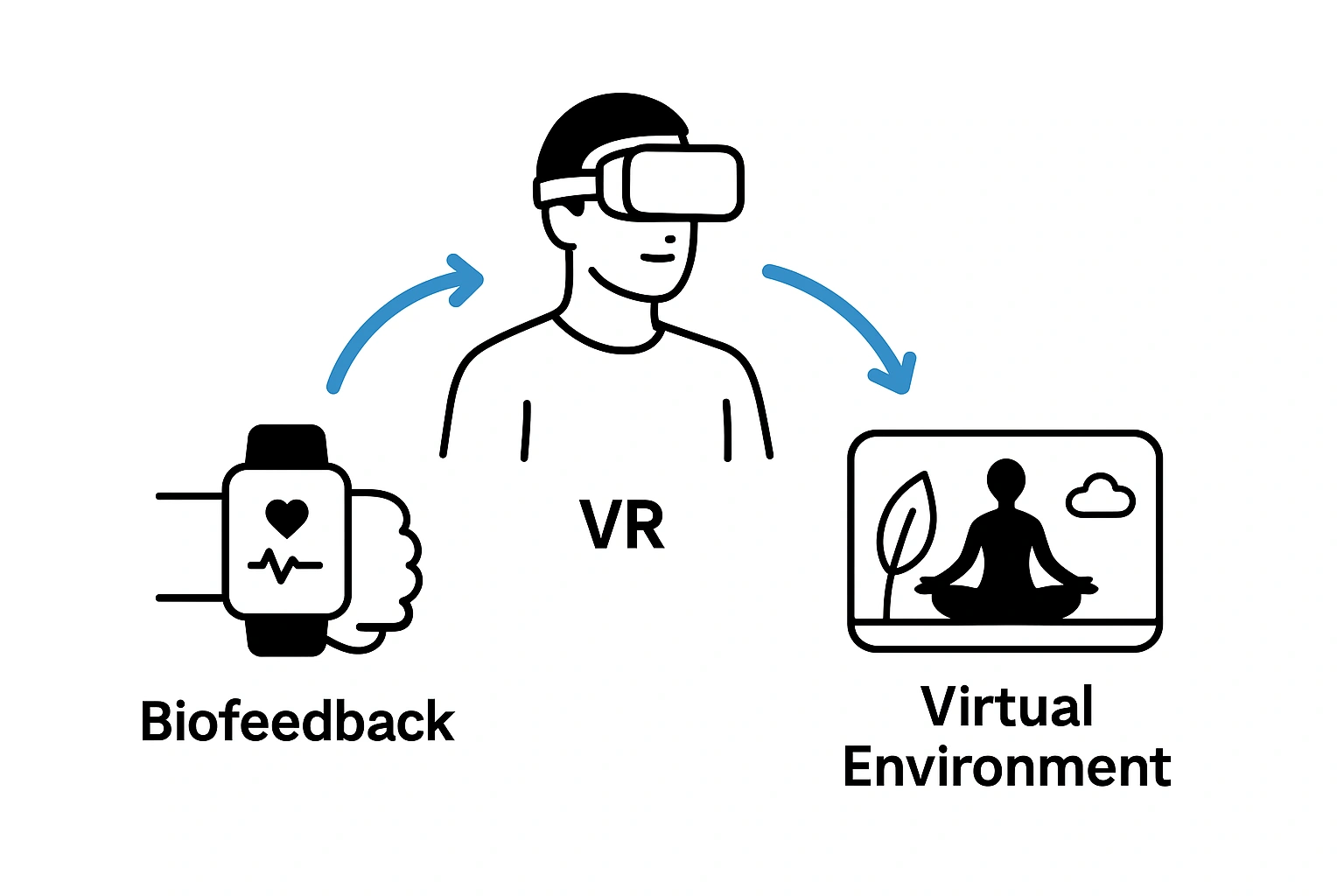
- Biofeedback Integration: By connecting to a heart rate monitor, the app can change the environment based on your physiological state. As you relax, the virtual sun might rise, or a storm might clear.
- Controlled Exposure Therapy: In a clinical setting, therapists can use VR to create safe, repeatable simulations of phobias (like public speaking or fear of heights) to help patients build resilience.
- Interactive CBT Tools: Apps can present users with challenging scenarios and provide them with interactive tools and techniques to reframe negative thought patterns in a gamified way.
Use Case Spotlight: “SanctumVR” Meditation App
Let’s look at a fictional but representative example of a next-gen VR wellness app.
Experience: “SanctumVR” is a subscription service that offers a library of hyper-realistic natural environments. I chose a Japanese zen garden. The experience was breathtakingly real, from the sound of the wind chimes to the sight of koi fish swimming in a pond. A soothing guide led me through a 20-minute mindfulness session. The app used the headset’s eye-tracking to make virtual butterflies land where I focused my gaze, a simple but powerful mechanic that kept me anchored in the present moment.
| Pros | Cons |
|---|---|
| Incredibly immersive and effective at blocking distractions | Requires a subscription for full library access |
| Innovative use of eye-tracking for mindfulness | Some environments may be too graphically demanding for older headsets |
| Wide variety of session lengths and topics | Less effective without good quality, noise-canceling headphones |
Comparison of Emerging VR Wellness Categories
| Category | Core Mechanic | Primary Goal | Best For |
|---|---|---|---|
| Meditation & Mindfulness | Guided sessions in serene, immersive environments. | Stress reduction, improved focus. | Daily practice and unwinding. |
| Anxiety & Stress Relief | Interactive relaxation exercises, biofeedback. | In-the-moment calming, emotional regulation. | Managing acute moments of stress. |
| Mental Health Gamification | Gamified CBT exercises, mood tracking. | Building healthy mental habits. | Users who prefer a goal-oriented approach. |
| Clinical VR Therapy | Controlled exposure therapy, simulated scenarios. | Treating specific phobias and PTSD. | Use under the supervision of a therapist. |
Common Mistakes to Avoid with VR Wellness
While powerful, this technology should be used mindfully. Avoid these common pitfalls:
- Replacing Professional Help: VR apps are tools, not therapists. They should not be used as a substitute for professional medical advice or therapy.
- Using it as an Escape, Not a Tool: The goal is to build skills you can use in the real world, not to permanently escape from it.
- Ignoring Physical Comfort: An uncomfortable headset or motion sickness can counteract any mental benefits. Ensure your device is properly fitted.
- Disregarding Content Ratings: Some therapeutic apps, especially for exposure therapy, can be intense and should only be used as intended.
- Expecting an Instant Fix: Like any mental wellness practice, consistency is key. The benefits are cumulative.
Expert Tips for Getting Started
Ready to explore virtual wellness? Here’s how to do it right:
- Create a Safe, Quiet Space: Choose a comfortable, seated position where you won’t be disturbed.
- Use Good Headphones: High-quality audio is crucial for immersion in guided meditations.
- Start with Short Sessions: Begin with 5-10 minute sessions to get comfortable with the experience before moving on to longer ones.
- Set an Intention: Before you begin, take a moment to decide what you want to achieve from the session—be it relaxation, focus, or just a moment of peace.
- Integrate, Don’t Isolate: Reflect on your VR session afterward. Think about how you can take the feelings of calm or the techniques you learned into your daily life.
“VR provides a unique ‘digital sanctuary’ where the brain can safely process emotions and learn new regulation skills. The ability to control every sensory input makes it one of the most powerful mental health tools of our time,” says clinical psychologist Dr. Lena Hanson.
FAQ (Frequently Asked Questions)
Answering your questions about the **future of VR wellness apps**.
Q: Can VR wellness apps replace traditional therapy?
A: No. VR wellness apps are powerful tools for managing stress, anxiety, and practicing mindfulness, but they are not a replacement for professional therapy with a licensed mental health provider. They are best used as a supplementary tool.
Q: Is there scientific evidence that VR helps with mental health?
A: Yes, a growing body of research supports the use of VR for conditions like anxiety, PTSD, and phobias. Clinical studies have shown its effectiveness in exposure therapy and for reducing stress and pain perception through immersion.
Q: What is biofeedback in a VR wellness app?
A: Biofeedback is a technique where the app uses data from a wearable sensor (like a heart rate monitor) to change the virtual environment. For example, as your heart rate lowers during meditation, the virtual scenery might become calmer and more beautiful, providing positive reinforcement.
Q: Are VR wellness apps safe for people with severe anxiety?
A: While many apps are designed to be calming, individuals with severe anxiety or other serious mental health conditions should consult with a healthcare professional before using them. Some immersive experiences could be overwhelming without proper guidance.
Q: How is VR used for exposure therapy?
A: VR allows therapists to create safe, controlled, and realistic simulations of situations that trigger a patient’s phobia (e.g., public speaking, flying, heights). This allows the patient to confront their fears in a gradual and manageable way under professional supervision.
Conclusion
The future of VR wellness apps represents a profound shift in how we approach mental healthcare. VR wellness apps provide accessible, immersive, and effective tools that help users take an active role in their mental and emotional well-being. With VR wellness apps, meditation, stress relief, and guided therapy become more engaging and easier to integrate into daily life. By exploring VR wellness apps, individuals can experience personalized, interactive support, showing how VR wellness apps are redefining the future of virtual health and self-care.
From on-demand stress relief to clinically validated therapeutic tools, VR is creating a new reality for our minds. As the technology continues to evolve, it will become an indispensable part of a holistic approach to health, offering a sanctuary of calm in an increasingly chaotic world. For more on digital health innovations, follow major health tech news from sources like Statista.
What kind of VR wellness app would you most like to see? Share your ideas in the comments below!