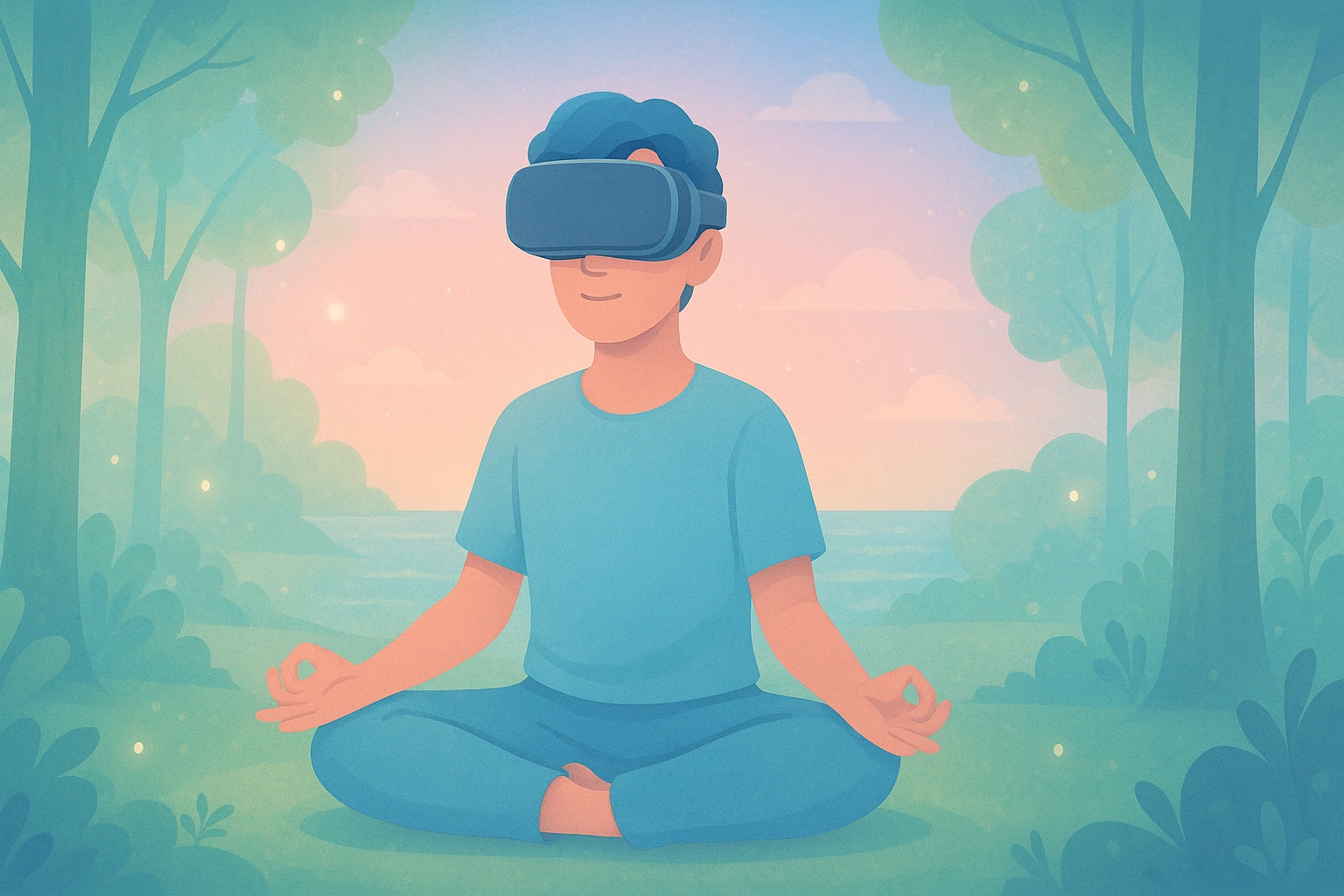
This isn’t an expensive vacation; it’s the power of virtual reality. This guide is for anyone searching for a sanctuary from the noise. We’re exploring the best VR meditation apps of 2025, powerful tools designed to help you find calm, reduce anxiety, and build a lasting mindfulness practice.
After reading this, you’ll know exactly which apps can guide you to a state of deep relaxation and provide effective, immersive stress relief right from your living room.
What is VR Meditation?
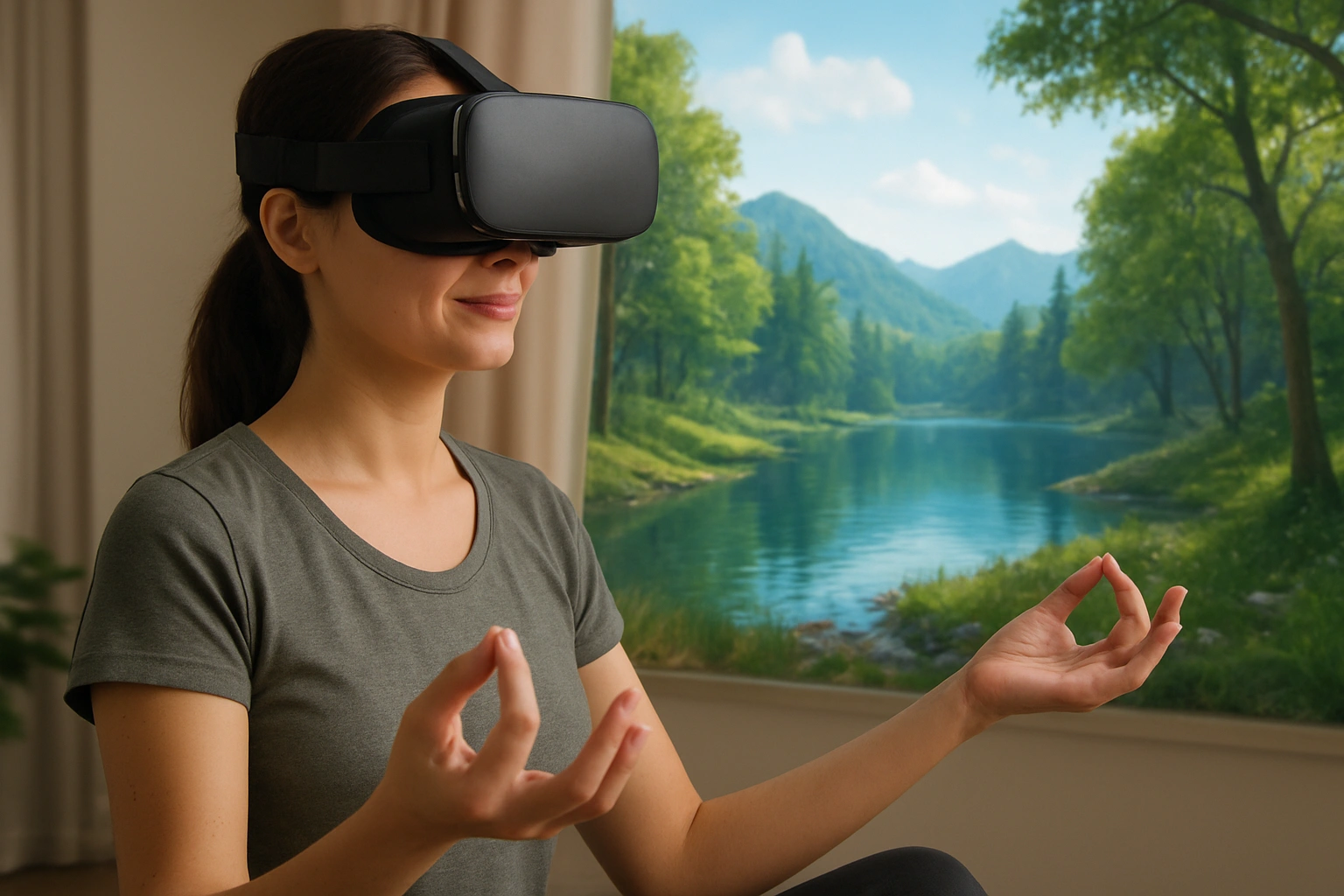
VR meditation is the practice of using a virtual reality headset to enter a serene, computer-generated environment for mindfulness and relaxation. By completely taking over your senses of sight and hearing, it removes real-world distractions, making it easier to focus on guided meditations, breathing exercises, or simply the peaceful scenery around you.
In 2025, this form of **virtual reality stress relief** has become a vital tool in the digital wellness toolkit. As the global wellness market continues to grow, a trend reported by Statista, tech-driven solutions like VR are providing more accessible and effective ways for people to manage their mental health.
Why VR is a Powerful Tool for Mindfulness
Traditional meditation is challenging for many because our modern world is full of distractions. VR offers a unique and powerful solution.
Eliminates External Distractions
The number one challenge for beginners is focus. A notification on your phone, a noise from outside, or even just the clutter in your room can pull you out of the moment. A VR headset acts as a personal sensory deprivation chamber, blocking out the outside world so you can focus inward.
Deepens Immersion and Presence
Being told to “imagine a peaceful beach” is one thing. Being visually and audibly transported to one is another. The immersive nature of VR makes it easier to feel truly present in a calming environment, which is the very essence of mindfulness.
Makes Mindfulness a Habit
The novelty and beauty of VR meditation can make it an experience you look forward to. By turning meditation into an enjoyable escape rather than a chore, it becomes much easier to build a consistent daily practice. Managing your daily tasks with tools like a virtual assistant can also help reduce stress, creating more space for practices like these.
Core Features of VR Meditation Apps
These apps are more than just pretty environments. They contain powerful tools to guide your practice:
- Guided Meditations: Audio sessions led by experienced instructors that cover topics like stress, focus, gratitude, and sleep.
- Breathing Exercises: Many apps use beautiful, expanding and contracting visuals to help you synchronize your breath, a core technique for calming the nervous system.
- Immersive Environments: A library of stunning 360-degree locations, from realistic beaches and forests to fantastical cosmic landscapes.
- Biofeedback: Advanced apps like Healium can connect with external devices (like smartwatches or EEG headbands) to use your real-time biometric data to influence the virtual world.
In-Depth Reviews: The 5 Best VR Meditation Apps of 2025
1. TRIPP
TRIPP is often described as a “psychedelic wellness” experience. It uses stunning, otherworldly visuals and binaural audio to guide you through focus and breathing exercises. It’s less about traditional meditation and more about a powerful, mind-altering journey.
| Pros | Cons |
|---|---|
| Incredibly unique and powerful visuals. | Requires a subscription for full access. |
| Daily “Focus” and “Calm” trips keep it fresh. | The intense visuals may not be for everyone. |
| Backed by scientific research. |
Best for: A powerful, visually-driven mindfulness experience that feels truly transformative.
2. Maloka
Maloka turns mindfulness into a gentle, rewarding game. Each meditation session helps you grow your own private island sanctuary. You choose a spirit guide, and as you practice, your island flourishes with new plants and features.
| Pros | Cons |
|---|---|
| Gamified approach is great for habit-building. | Guided meditations are shorter than in other apps. |
| A generous amount of content is available for free. | The art style is more stylized than realistic. |
| Your personal island provides a sense of progress. |
Best for: Beginners who want a gentle, gamified introduction to building a meditation habit.
3. Guided Meditation VR
One of the original relaxation apps, this is a straightforward and effective tool. It offers a massive library of over 100 stunning, photorealistic environments and hundreds of hours of guided meditations on various topics.
| Pros | Cons |
|---|---|
| Huge library of realistic environments. | Interface feels a bit dated compared to newer apps. |
| Focuses on simple, effective guided sessions. | Less interactive than other options. |
| One-time purchase model. |
Best for: Those who want a simple, no-frills meditation experience with maximum location variety.
4. Healium
Healium is a unique app that uses biofeedback to power the experience. By connecting to a smartwatch or EEG headband, your own feelings of calm and focus (measured by heart rate and brainwaves) cause the virtual world to change and grow, creating a powerful mind-body connection.
| Pros | Cons |
|---|---|
| The only app that uses real-time biofeedback. | Requires external hardware for the full experience. |
| Clinically validated to reduce stress. | Requires a subscription. |
| Visually seeing your calm have an effect is powerful. |
Best for: A data-driven approach to mindfulness and seeing a direct result of your practice.
5. Guided Tai Chi
This app offers a different approach: mindful movement. You’ll follow a guide through gentle, flowing Tai Chi routines in beautiful natural settings. It’s a perfect blend of physical relaxation and mental focus.
| Pros | Cons |
|---|---|
| Combines physical movement with mindfulness. | Requires more space than seated meditations. |
| Excellent for releasing physical tension. | The focus is on movement, not deep meditation. |
| One-time purchase model. |
Best for: People who find it hard to sit still and prefer to relax through gentle, flowing movement.
Comparison of the Best VR Meditation Apps 2025
| App | Style | Key Feature | Price Model | Best For |
|---|---|---|---|---|
| TRIPP | Psychedelic Wellness | Powerful Visuals | Subscription | Deep Immersion |
| Maloka | Gamified Mindfulness | Personal Zen Garden | Free / One-Time | Habit Building |
| Guided Meditation VR | Traditional | 100+ Realistic Locations | One-Time | Variety & Simplicity |
| Healium | Biofeedback | Mind-Powered Interaction | Subscription | Data-Driven Calm |
| Guided Tai Chi | Mindful Movement | Gentle, Flowing Exercise | One-Time | Relaxing the Body |
Common Mistakes to Avoid in VR Meditation
To get the most benefit from your practice, avoid these common pitfalls.
- Expecting Instant Results: Mindfulness is a skill that builds over time. Don’t get discouraged if your mind still wanders in the first few sessions.
- Choosing an Overstimulating Environment: More isn’t always better. Sometimes a simple, dark cosmic scene is more calming than a visually busy forest. Experiment to find what works for you.
- Having an Uncomfortable Setup: A headset that’s too tight or has the wrong lens spacing will be a constant distraction. Take a few minutes to adjust it for perfect comfort.
- Ignoring the Breathing Exercises: The beautiful visuals are only half of the experience. The guided breathing cues are the most direct way to calm your nervous system.
- Forcing Relaxation: You can’t force yourself to relax. The goal is simply to be present and observe your thoughts without judgment. Let relaxation be a natural side effect.
Expert Tips for a Deeper Practice
Ready to deepen your mindfulness? Follow these expert tips.
- Use Good Headphones:
“The power of VR meditation is its ability to hijack your senses for good. High-quality over-ear headphones will block out ambient noise and fully immerse you in the binaural audio and guided narration,”
says a simulated mindfulness expert.
- Find a Comfortable Seated Position: Sit upright in a chair with your feet flat on the floor, or cross-legged on a cushion. A comfortable posture is key for longer sessions.
- Schedule Your Sessions: Treat your meditation time as an important appointment. Consistency is more important than duration. Even 10 minutes a day can make a huge difference.
- Focus on Physical Sensations: Pay attention to the feeling of your breath, the contact of your body with the chair, or the gentle vibration of the controller. This helps anchor you in the present moment.
FAQ – Frequently Asked Questions
Q: Can VR meditation actually reduce anxiety?
A: Yes. Numerous studies on mindfulness and biofeedback show that these practices can significantly lower stress and anxiety. VR enhances these practices by providing a deeply immersive, distraction-free environment, which can make meditation more effective for some people.
Q: Do I need a lot of space for VR meditation?
A: No. Unlike VR fitness games, most VR meditation apps are designed to be used while sitting comfortably in a chair or on the floor. You only need enough space to sit down and move your arms slightly.
Q: Are there any good free VR meditation apps?
A: Yes, some apps like Maloka offer a substantial free experience, while others like Tripp provide free demos. However, for the full library of content and features, most top-tier apps require a one-time purchase or a subscription.
Q: Is this better than regular meditation apps like Calm or Headspace?
A: It’s different and depends on the person. The key advantage of VR is its unparalleled immersion, which is extremely helpful for people who are easily distracted by their physical surroundings. If your biggest challenge is shutting out the world, VR can be a game-changer.
Q: Can VR meditation cause dizziness or motion sickness?
A: It’s very unlikely. The best meditation apps use little to no artificial movement. They are typically stationary, seated experiences designed for comfort and relaxation. Ensuring your headset fits properly will also prevent any discomfort.
Conclusion