
Introduction
Just a few years ago, VR fitness was a niche concept. Today, it’s a mainstream phenomenon. But if you think virtual workouts have peaked, you’ve only seen the beginning. The technology is evolving at a breathtaking pace, with future VR fitness apps promising a smarter, more immersive, and more effective virtual gym experience. Future VR fitness apps are designed to make every workout engaging and tailored to your needs. By exploring future VR fitness apps, you can get a glimpse of how exercise will transform into an exciting adventure. With future VR fitness apps leading the way, the future of fitness is not only virtual but incredibly motivating.
This guide will pull back the curtain on the groundbreaking advancements set to redefine virtual exercise in 2025 and beyond. Future VR fitness apps are introducing AI personal trainers that perfect your form and mixed reality workouts that blend your home with a virtual playground. By exploring future VR fitness apps, you’ll discover how these innovations will make exercise more engaging and effective. Future VR fitness apps are shaping the way we stay fit, turning workouts into immersive experiences. With future VR fitness apps leading the charge, the future of virtual fitness is both exciting and accessible.
The Next Generation of Virtual Workouts
The future of VR fitness isn’t just about better graphics; it’s about creating deeply intelligent, personalized, and integrated experiences. It’s the shift from simple game-like exercise to holistic digital wellness platforms that understand and adapt to your body’s unique needs.
By 2025, the industry is projected to grow exponentially, with market analysis from sources like Statista indicating a massive influx of investment in AI and sensor technology. The goal is to erase the line between a virtual game and a session with a world-class personal trainer, making elite fitness guidance accessible to everyone with a headset.
Key Trends Shaping the Future of VR Fitness
Several key technologies are converging to create the next wave of VR fitness. These aren’t distant dreams; they are actively being developed and integrated into the apps you’ll be using soon.
Hyper-Personalization with AI Coaching
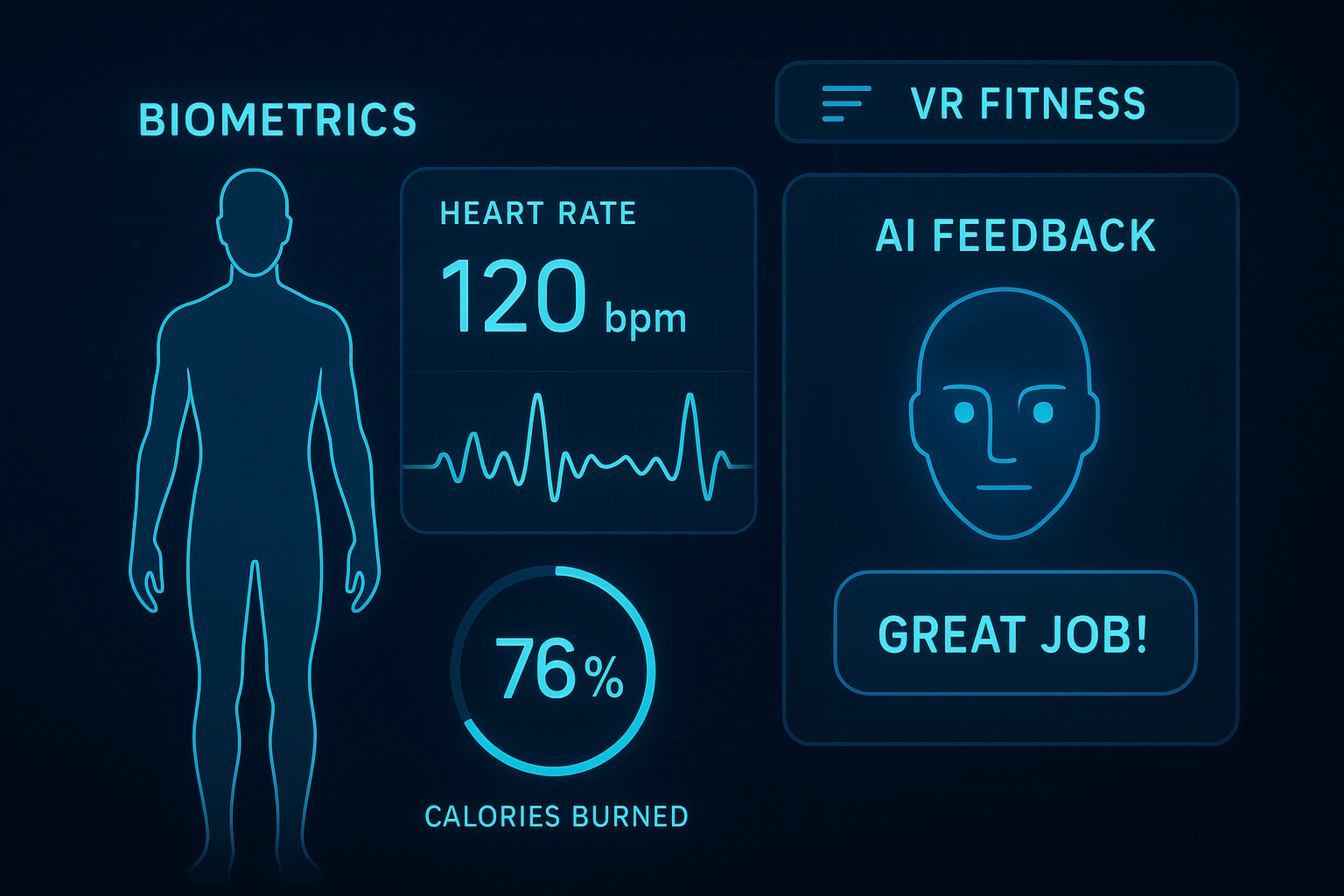
This is the biggest game-changer. Future VR fitness apps will use artificial intelligence to offer a level of personalization that was once exclusive to elite athletes. Your virtual coach will know you better than you know yourself.
- Real-Time Form Correction: Using headset cameras and AI, the app will analyze your movements and provide instant verbal and visual feedback to correct your squat form or boxing stance.
- Dynamic Difficulty Adjustment: If your heart rate is too low or you’re hitting targets too easily, the AI will automatically increase the intensity. Struggling? It will scale back to prevent burnout.
- Predictive Health Insights: By tracking your performance over time, the AI can suggest rest days, recommend specific stretches to avoid injury, and tailor workouts to your long-term goals.
True Immersion with Full-Body Tracking
Today’s VR fitness mostly tracks your head and hands. The future is tracking your entire body without cumbersome sensors. This will unlock a new dimension of exercise.
- Leg and Torso Tracking: Imagine kicking targets, performing complex yoga poses, or learning dance routines with your entire body accurately represented in VR.
- Advanced Analytics: Apps will be able to measure the height of your jumps, the depth of your lunges, and the rotation of your torso, providing a wealth of new performance data.
- Camera-Based Solutions: Companies are developing “inside-out” tracking that uses the headset’s own cameras to estimate your body’s position, making full-body tracking accessible without extra hardware.
Mixed Reality (MR) Workouts
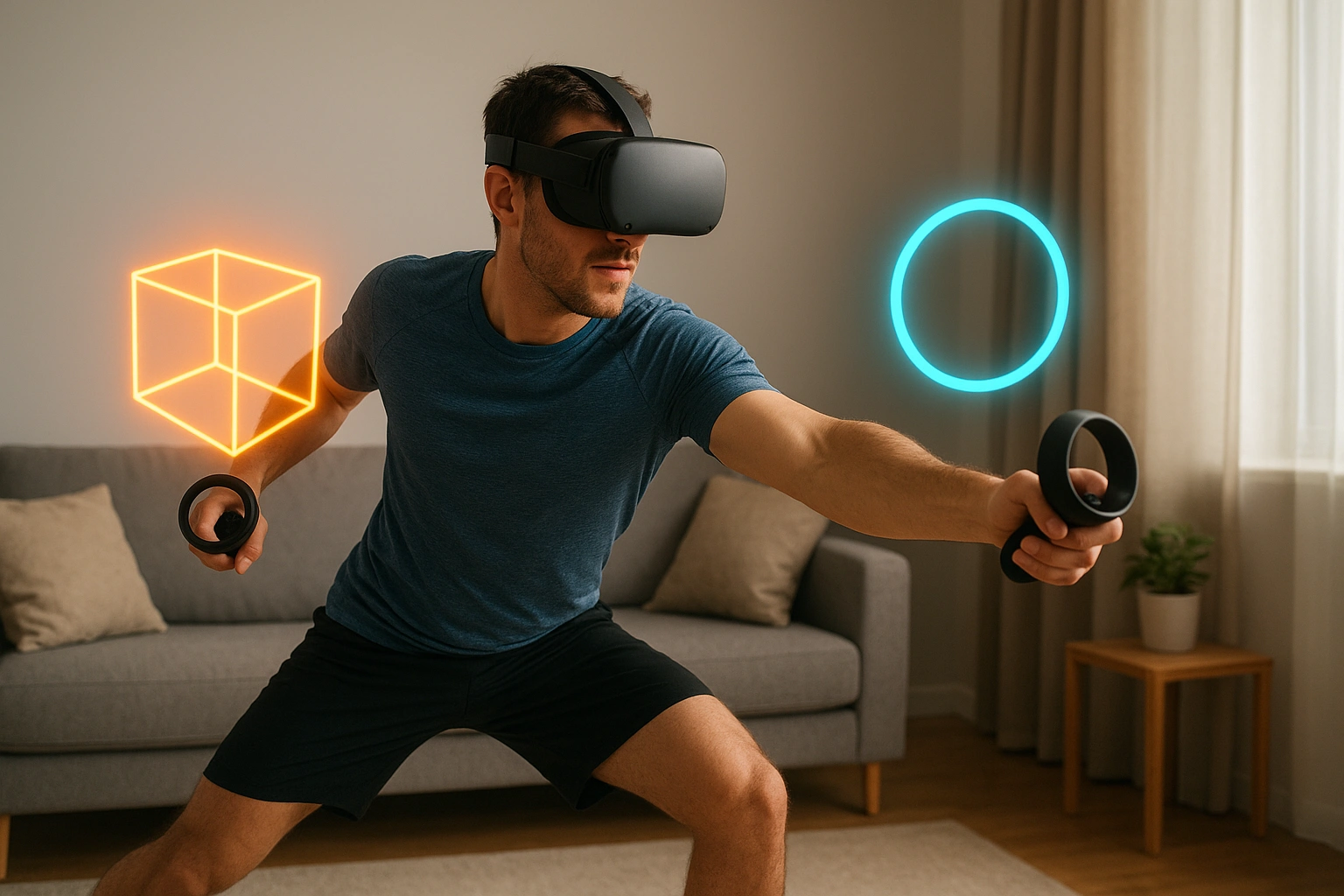
Why choose between the real and virtual worlds? Mixed reality blends them together. With the advanced passthrough cameras on new headsets, your living room becomes the gym. This enhances safety and creates entirely new workout paradigms. For help organizing your new workout routines, services like Virtual Assistant Biz ID can be a great asset.
A Day in the Life of a 2025 VR Workout
Let’s visualize how these **VR workout technology trends** will come together.
- Smart Start: You put on your headset. The app greets you, notes from your biometric data that you had a poor night’s sleep, and suggests a lower-intensity mobility workout instead of the planned HIIT session.
- MR Warm-up: The warm-up begins in mixed reality. Virtual rings appear in your living room, guiding you through dynamic stretches while you remain aware of your surroundings.
- AI-Coached Main Session: The main workout starts. You’re in a full VR environment. As you perform squats, a virtual skeleton overlay appears, showing you how to correct your knee alignment. Your AI coach’s voice provides encouragement based on your effort level.
- Data-Rich Cool-down: After the workout, you see a detailed summary, including a 3D replay of your form, a comparison to your previous sessions, and personalized tips for your next workout.
Emerging Hardware and Platforms
The software evolution is being driven by incredible new hardware.
The Rise of Lighter, More Powerful Headsets
Companies are racing to create headsets that are as comfortable as a pair of sunglasses but as powerful as a gaming console. Expect devices with higher resolution, wider fields of view, and significantly reduced weight, making longer workout sessions more comfortable.
| Current Tech (e.g., Quest 3) | Future Tech (Expected by 2025-2026) |
|---|---|
| Good color passthrough for MR | HD, photorealistic passthrough |
| Basic hand tracking | Advanced hand and body tracking (no controllers needed) |
| ~500g weight | Sub-300g weight with better balance |
Challenges on the Horizon
The future is bright, but there are hurdles to overcome:
- Data Privacy: With apps collecting biometric and movement data, ensuring user privacy and security will be paramount.
- Content Fragmentation: The market is becoming crowded. Users may face subscription fatigue, needing multiple services for different types of workouts.
- Hardware Cost: While prices are falling, the initial investment in a high-quality headset can still be a barrier for some.
- Standardization: Creating standards for things like body tracking and haptics will be crucial for developers to create consistent experiences across different devices.
How to Prepare for the Future of Fitness
Want to be ready for the next wave? Here’s how:
- Invest in a Modern Headset: Choose a device with good passthrough capabilities, like a Meta Quest 3, to be ready for mixed reality apps.
- Prioritize Subscription Services: Apps like Supernatural are at the forefront of innovation and will likely be the first to integrate these new features.
- Stay Informed: Follow tech news outlets like TechCrunch to stay updated on the latest hardware and software releases.
- Focus on Consistency Now: Build the habit of regular VR workouts today. The best technology in the world is useless if you don’t use it.
“We are moving from gamified fitness to intelligent fitness. The future VR coach won’t just count your reps; it will understand your body’s limits, potential, and goals, creating a truly symbiotic training partnership,” says tech analyst and futurist Dr. Evelyn Reed.
FAQ (Frequently Asked Questions)
Here are answers to common questions about the **future of VR fitness apps**.
Q: Will future VR fitness apps require more expensive hardware?
A: Not necessarily. While high-end features may use advanced hardware, the trend is towards more powerful standalone headsets at competitive prices. Many upcoming software features, like AI coaching, will work on existing hardware like the Meta Quest 3.
Q: How will AI change VR fitness?
A: AI will act as a personal trainer, analyzing your movements to correct form, dynamically adjusting workout difficulty based on your real-time performance, and creating hyper-personalized long-term fitness plans.
Q: What is mixed reality (MR) fitness?
A: Mixed reality fitness overlays virtual elements onto your real-world environment. Imagine boxing virtual opponents in your living room or having digital targets appear on your actual walls. It enhances immersion while keeping you aware of your surroundings.
Q: Will I need full-body trackers for future VR workouts?
A: While dedicated trackers will offer the highest precision, headset manufacturers are developing AI-powered, camera-based body tracking (inside-out tracking) that won’t require extra hardware, making full-body workouts more accessible.
Q: Are VR workouts going to become more social?
A: Absolutely. The future of VR fitness is highly social, with a focus on multiplayer classes, competitive leaderboards, and shared virtual workout spaces where you can exercise with friends’ avatars in real-time.
Conclusion
The evolution of VR fitness is one of the most exciting stories in technology and wellness today. We are on the cusp of an era where future VR fitness apps will make workouts perfectly tailored to each user. With future VR fitness apps, intelligent systems guide every move, creating immersive experiences that blend seamlessly with our physical reality. The potential of future VR fitness apps promises to make exercise more effective, engaging, and accessible than ever before, transforming how we stay fit.
The journey is just beginning. As future VR fitness apps continue to evolve, they will empower millions to take control of their health in a way that feels less like work and more like play. Future VR fitness apps are turning the concept of a gym into a fully immersive experience, where you step into workouts instead of going to a physical location. By using future VR fitness apps, exercise becomes engaging, personalized, and fun, showing how technology can redefine fitness. With future VR fitness apps leading the way, staying healthy has never been more exciting or accessible.
What future VR fitness feature are you most excited about? Share your thoughts in the comments below!